







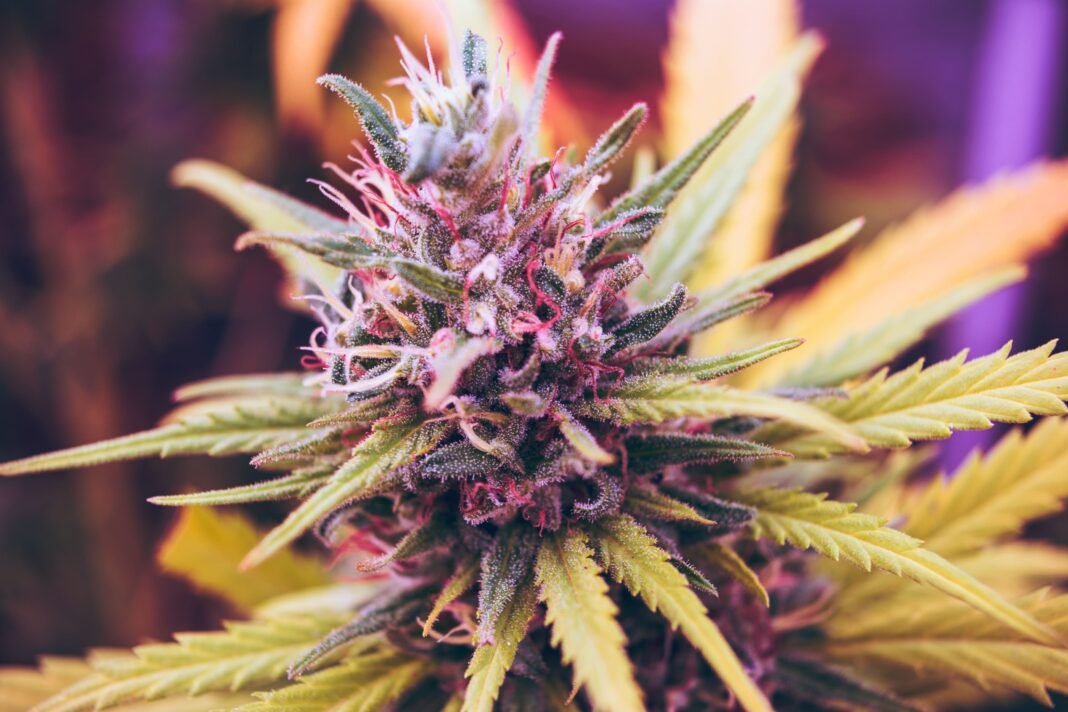

According to a recent study, women who regularly use marijuana are happier in their relationships. For men, however, it appears that the reverse is true. The reasons are not immediately apparent.
In the month of April, Drug and Alcohol Dependence journal published an article by Ariel University and Achva Academic College researchers in Israel.
The paper states that researchers recruited 110 couples to complete questionnaires about “cannabis usage patterns, general satisfaction in relationship quality, satisfaction of the quality of sexual relations, and perceived partner responsiveness.”
Women who consumed marijuana more frequently and/or in a high intensity reported greater satisfaction with their relationships. They also rated their partners’ fulfillment as higher than women who did not use cannabis at all or only used it occasionally.
High-intensity marijuana use has been linked with higher levels of relationship satisfaction in women.
Curiously, however, the study—funded in part by the Israeli Science Foundation, which receives support from the Israeli government—concluded that “men reported the opposite” experience.
Researchers say that further study is needed to understand why the level of marijuana consumption affects romantic relationships differently for men and women.
This study is unique in that it examined possible dose-response interactions.
The study found that discrepancy between cannabis intensity and relationship satisfaction was associated with lower overall satisfaction as well as lower satisfaction in the quality of sexual relations. Additionally, dyadic analysis indicated that women using cannabis in a high-intensity tend to increase their relationship satisfaction as well as their perceptions of partner responsiveness.
This study highlights how cannabis intensity affects romantic relationships.
The study said: “In contrast to women, men with high cannabis use reported lower levels of satisfaction. They also perceived their partners’ responsiveness as being lower, though this did not reach statistical significance. Further research should explore these findings in larger samples and future studies.”
The study also confirmed the researchers’ hypothesis, that discrepancies between marijuana consumption rates in couples are “generally correlated with lower relationship quality.”
The compatibility theory states that the enjoyment and investment of a relationship can be increased by sharing activities. Concordant substance usage may encourage frequent social interactions and sharing of activities.
Couples who don’t smoke cannabis or use it in different levels of intensity may have fewer experiences that are associated with satisfaction. This “may affect their marriage quality”.
The women who reported high cannabis use also felt more satisfied with their relationship and that their partner was responsive.
Researchers said that the findings could be due to men using marijuana more often than women. “This is linked with an increase in adverse effects.”
The study states that women use cannabis less frequently and in smaller quantities, and this is associated with better quality of life and fewer negative consequences than heavy users. It is therefore possible that male cannabis users experience greater negative psychological, physical and interpersonal consequences, and this may negatively impact both the satisfaction of men and their partner with their romantic relationship.
The report continues: “Women, on the other hand, might experience positive effects associated with low intensity cannabis use. These, in return, could be positively related to both their own perception and their partner’s perception of relationship qualities.”
When women use high levels of cannabis, they act differently from the traditional expectations for female behavior. Some have suggested that adopting non-traditional gender roles like cannabis usage may result in positive outcomes because it allows one to stay true to themselves rather than conforming with gender norms. Women who do not conform to traditional gender roles can experience greater autonomy and authenticity.”
Although the research focused on romantic relations, another recent study found that marijuana could play an important role in enhancing sexual satisfaction.
A recent review of scientific literature found, for example that the use of cannabis is linked to improvements in female orgasmic disorders.
Relatedly, another study published recently found that marijuana use is linked to increased sexual desire and arousal, as well as lower levels of sexual distress.
Late last year, a study found that cannabis-infused vaginal suppositories seemed to reduce sexual pain in women after treatment for gynecological cancer. The suppositories were combined with “mindful compassion exercises” online to offer patients more benefits.
The results favoured [combined] The research stated that “in this group, sexual function and levels of sexual arousal increased and levels of orgasm and lubrication decreased, while levels of pain were reduced.”
Earlier research also found that administration of a broad-spectrum, high-CBD vaginal suppository was associated with “significantly reduced frequency and severity of menstrual-related symptoms” as well as the symptoms’ negative impacts on daily life.
A separate study from last year revealed that, in terms of sexual fulfillment, while alcohol may be effective at “facilitating” sex and sexual sensitivity, marijuana enhances sexual satisfaction.
While alcohol increased some elements of sexual attraction—including making people feel more attractive, more extroverted and more desirous—people who used marijuana “have more sensitivity and they are more sexually satisfied than when they consume alcohol,” authors wrote.
A broad scientific review of academic research on cannabis and human sexuality published last year concluded that while the relationship between marijuana and sex is a complicated one, use of cannabis is generally associated with more frequent sexual activity as well as increased sexual desire and enjoyment.
This article in Psychopharmacology also stated that low doses of cannabis may be the best for sexual pleasure, while high doses can lead to The price of a decrease is lowered In desire and performance. The study also suggested there may be differences in effects between women and men
Sponsored Content
This informative article is brought to you by NUBO CBD →