







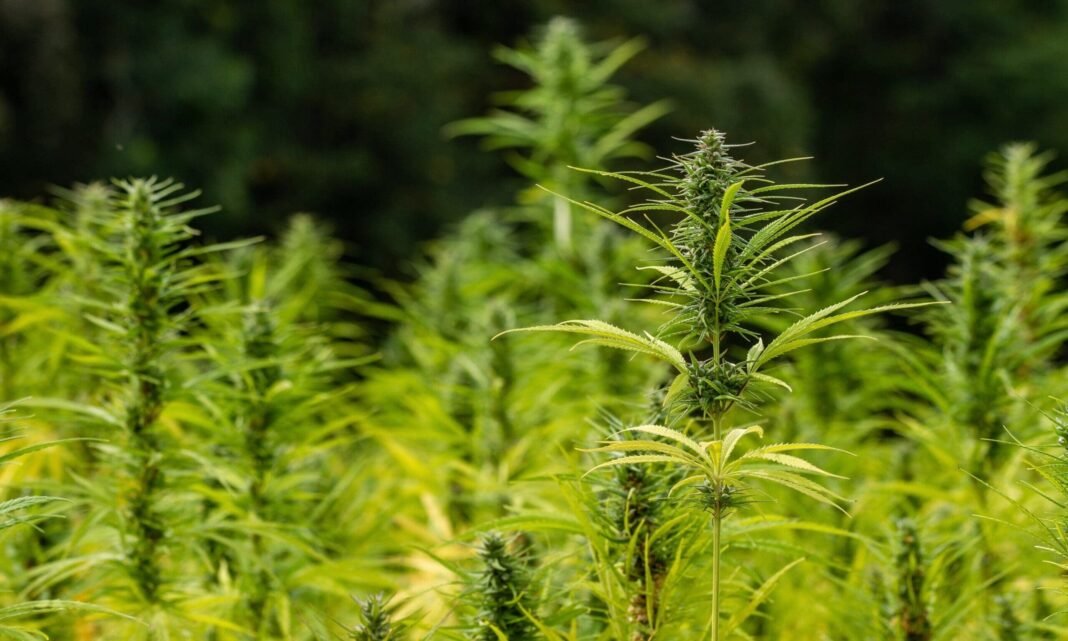

39 Attorneys General from states and territories, representing both parties in the coalition, are asking Congress to clear up the federal definition for hemp and take steps to prevent the sale and distribution of products containing cannabinoids that cause intoxication.
Members of the National Association of Attorneys General expressed their concerns in a Friday letter to Republican Chairs of House and Senate Appropriations and Agriculture Committees. They said that provisions of 2018 Farm Bill legalized hemp which has “been wrongly exploited” by bad actors for the sale of recreational synthetic THC-containing products throughout the United States.
The group is asking lawmakers to use the Appropriations Process, or next version of the Farm Bill in order to implement policy changes which “leave little doubt” that the harmful products they are selling and manufacturing are illegal.
The letter was signed by Arkansas Attorney general Tim Griffin (R), Connecticut attorney general William Tong, Indiana attorney general Todd Rokita and Minnesota attorney General Keith Ellison.
“Intoxicating hemp-derived THC products have inundated communities throughout our states due to a grievously mistaken interpretation of the 2018 Farm Bill’s definition of ‘hemp’ that companies are leveraging to pursue profits at the expense of public safety and health,” they wrote. “Many of these products—created by manufacturers by manipulating hemp to produce synthetic THC—are more intoxicating and psychoactive than marijuana a Schedule I controlled substance and are often marketed to minors.”
Although the discussion over the revision of federal hemp law has been an ongoing topic this year with both chambers trying to pass a ban on THC-containing products, these restrictions have so far only been implemented in states.
This letter warns that unless Congress takes action, the hemp provisions of the Farm Bill 2018 will be distorted in a way that fuels a rapid expansion of an industry under-regulated and dangerous to public health. It also undermines enforcement of laws across the nation.
Congress never intended for the Farm Bill of 2018 to legalize this product. It continues, “A proper interpretation of Farm Bill’s hemp provisions demonstrates that synthetic THC is based on illicit conduct.” Congress needs to give a clear directive to close this industry down before it becomes a bigger threat to public health than it is already.
Top state and territorial law enforcement officials have raised alarm over the fact that while hemp, which is cannabis with less than 0.3 percent delta-9-THC by weight dry, can synthesize intoxicating substances such as delta-8-THC, delta-10-THC and HHC.
They said: “This is how hemp, which is legal and non-intoxicating, can be used to create Frankenstein THC products, that cause adults to get high, and children harm or even die.”
The problem will not be solved if states outlaw psychoactive hemp products in order to protect their citizens. This will lead to an ineffective and uneven patchwork bans and regulation that differs from State-to-State and not be able to stop the flow of THC mail order products through interstate commerce. Congress needs to act now in order to protect the Farm Bill of 2018 from being sabotaged by the psychoactive hemp industries’ spoliation.
The letter was also signed by the Attorneys General of Alabama, Arizona California Colorado Delaware Hawaii Illinois Iowa Kansas Louisiana Maine Maryland Massachusetts Mississippi Missouri Nebraska Nevada New Hampshire New Mexico New York North Carolina North Dakota Ohio Oklahoma Pennsylvania Puerto Rico Rhode Island South Carolina South Dakota U.S. Virgin Islands Utah Vermont Virginia and Wyoming
“Importantly, the prohibition on products containing intoxicating levels of THC—of any kind and no matter how it is derived—will not inhibit the cultivation of hemp for industrial and agricultural uses since hemp does not contain intoxicating levels of THC,” they said. It is possible to achieve the original intent of the 2018 Farm Bill hemp provision while also eliminating the harmful and illegal drug markets that have been created due to incorrect interpretations.
This letter ends by saying, “We are grateful for your support of American farmers and the work you have done to develop a market that is well-regulated, orderly and free from intoxicants.” You should not let irresponsible companies take advantage of the good work you have done to sell dangerous products to our States. “We ask Congress to take decisive action to clarify the Farm Bill definition of hemp in order to remove THC-containing products from the market.”
It’s an extremely bold demand that could endanger the hemp industry. Although there is a general consensus that cannabinoid-containing products should not be sold to minors or accessible in a non-regulated way, many businesses believe a more middle ground approach with age-gating rules would be better.
A GOP senator hopes to substitute a proposed prohibition on hemp-derived THC with alternative appropriations that would mandate a study of state regulatory models for cannabinoids. Rand Paul (R) of Kentucky is circulating legislative language which he hopes will be included in the final package.
The Senate agriculture measure passed over the summer contained provisions that hemp stakeholders claimed would eliminate the hemp market. They said this by prohibiting consumable hemp with “quantifiable amounts” of THC. Paul removed the THC-containing language after the committee passed the bill.
Sen. Mitch McConnell (R-KY), who ushered in the federal legalization of hemp under the 2018 Farm Bill, championed the THC criminalization language and took to the floor to criticize those who opposed the ban, including Paul.
Meanwhile, Paul recently filed a standalone bill that would go in the opposite direction of the hemp ban, proposing to triple the concentration of THC that the crop could legally contain, while addressing multiple other concerns the industry has expressed about federal regulations.
He introduced legislation in June entitled the Hemp Economic Mobilization Plan Act. It mirrors versions he’s sponsored over the last several sessions.
Sponsored Content
This informative article is brought to you by NUBO CBD →