







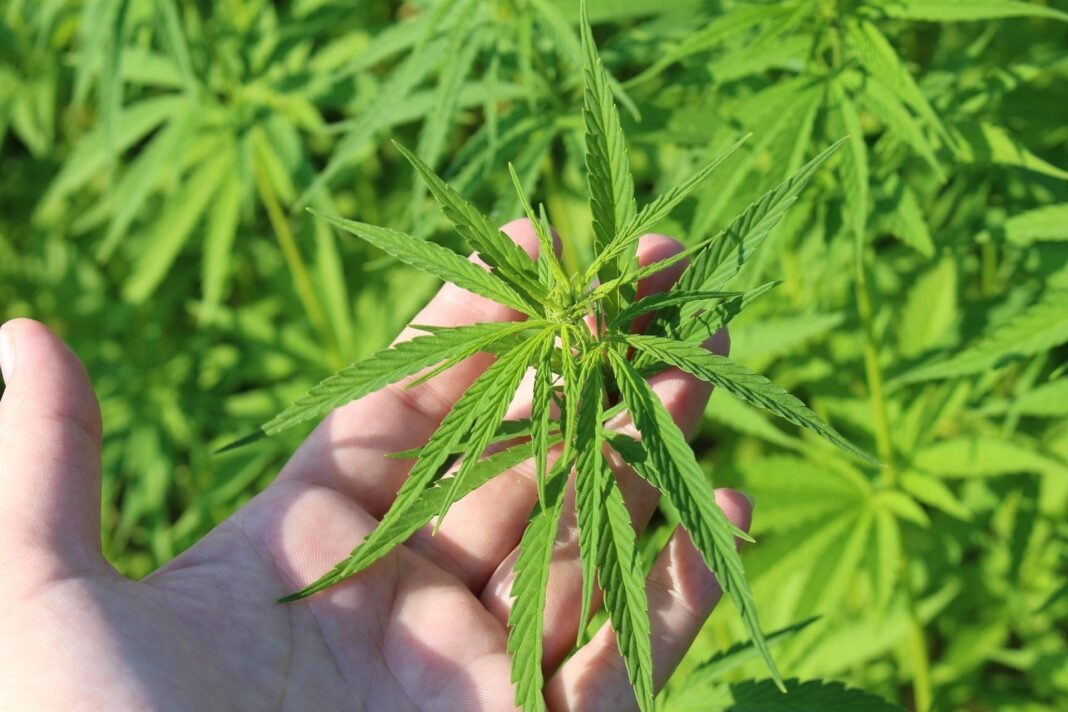

Increased understanding and acceptance could lead to greater demand from consumers and encourage more mainstream integration into appropriate regulatory frameworks of hemp-derived product.
Shawn Hauser Vicente LLP
This is a long overdue and historic milestone for U.S. cannabis policies. The Drug Enforcement Administration (DEA) has proposed reclassifying marijuana to Schedule III under the Controlled Substances Act. This change acknowledges the accepted medical uses of marijuana and its relatively low abuse potential, and is testament to years of relentless advocacy and changing scientific understanding.
It also highlights a crucial distinction between the cannabis laws of Canada and US: while marijuana is aiming to be a less restricted substance, hemp already has a non-scheduled status. Although both cannabis sources produce THC-rich commercial products, their federal regulatory structures and challenges are different.
To fully grasp the potential impacts of rescheduling, it is crucial to recognize that while both marijuana and hemp are derived from the Cannabis sativa L. plant, their federal legal statuses differ significantly—with marijuana currently completing the complex process to achieve a less restrictive scheduled status—while hemp is already federally unscheduled (a result of congressional action in the 2018 Farm Bill).
This means that some cannabis is “hemp”, and it’s not even subject to the CSA. The 2018 Farm Bill established a completely different legal framework for hemp. The 2018 Farm Bill was a landmark that legalized the use of hemp and its derivatives by federal law as an agricultural product (rather then a controlled drug). It defined hemp plants to be cannabis plants with less than 0.3% delta-9 THC dry weight.
How does the DEA’s reclassification of marijuana affect hemp’s legal status?
According to the proposed DEA marijuana rescheduling regulation, it does not change hemp’s current federal legal status as defined by the 2018 Farm Bill. This rule also doesn’t affect THC-containing substances that have already been rescheduled from Schedule I (such as Marinol and Syndros), nor the Schedule I status for “previously schedule synthetic cannabinoids”.
The federal regulatory or legal framework that currently applies to hemp does not alter when marijuana is moved from Schedule II to Schedule III. Hemp processing and cultivation will be subject to their specific state and federal regulations regardless of the new marijuana classification.
There are some important direct and indirect effects to consider.
What are the direct legal differences between marijuana and hemp under rescheduling
1. Hemp is not scheduled, marijuana remains controlled by DEA
Schedule III marijuana still requires FDA approval before it can be used in lawful interstate trade. FDA has only approved three synthetic cannabinoid based drugs and one cannabis-derived product (Epidiolex).
Hemp is not a controlled substance, but a commodity that can be sold legally in the interstate market. Despite having different CSA classifications, the Federal Food, Drug, and Cosmetic Act, or FDCA, governs sales of food, cosmetics, and drugs in interstate commerce.
Over the past decade, cannabis has mostly operated under FDA’s implied risk based enforcement policy. FDA did not enforce the FDCA in states that were compliant and focused primarily upon companies who made “egregious” medical claims or posed severe safety risks to public with their unapproved products.
2. FDA Marijuana/Hemp Illegality and Why Congress Still Has to Act
FDA clearly stated its current food and drug regulation framework was not adequate for cannabinoid regulations and that congressional action is needed to properly regulate cannabis. The agency has not shown any intention to use its resources in a mass enforcement of cannabis laws for over a decade.
In this case, the FDA is not shutting down the state marijuana and hemp programs. Instead, the problem lies in the lack of federal regulations.
A Congressional Research Service (CRS) report states that hemp-derived CBD could be allowed as a tobacco ingredient if marijuana were rescheduled. However, these products are still subject to FDA approval and health assessment. FDA has made it clear that its current food and drug regulations are not sufficient to regulate cannabinoids. It also stated that Congress is needed in order to properly regulate cannabis.
Some proposed federal regulatory structures consider other agencies as regulatory agencies. For example, the Alcohol and Tobacco Tax and Trade Bureau, (TTB), which works in conjunction with FDA.
3. Synthetic THC still remains as a Schedule 1 Substance but its definition is unclear.
The proposed rule clarifies that synthetically derived THCs (e.g., delta-10-tetrahydrocannabinol) are explicitly excluded from marijuana’s reclassification and remain Schedule I controlled substances. The law and DEA have repeatedly stated that synthetic cannabinoids, which do not occur naturally in hemp plants, are Schedule I drugs. However, the CSA does not define “synthetic”, and it is expected to remain contested and litigated.
In the absence of clear federal regulations, many states have implemented their own laws and restrictions. To ensure the safety of public, it is essential to establish a safe and regulated THC production and cannabinoids that are produced by synthesis or conversion.
4. Marijuana Extract Definition: A Potential Concern for Hemp Derivatives
The proposed rule by the DEA defines marijuana extract as “any plant from the genus Cannabis that contains greater than 0.3 percent Delta-9 THC”, without explicitly exempting cannabis-derived products.
This language is so broad that it could bring products like hemp, which are destined to exceed the 0.3-percent limit in intermediate processing under the DEA’s jurisdiction even if they meet the requirements for the final product. It has been a need for many years to clarify legal protections of “Work in Progress (WIP),” materials.
How will the reclassification of marijuana affect the hemp industry?
Although the changes to the hemp laws are minor, the reclassification of marijuana is anticipated to have a greater impact on the cannabis industry. They could benefit the hemp sector and help to move towards federal regulations for cannabinoid-based products.
Enhancing Legitimacy and Public Reception
The federal government has officially recognized cannabis’ medical value and reduced potential for abuse by moving it out of Schedule I. Cannabis is currently classified as one the most dangerous, highly abused and dangerous drugs, with no medical purpose. It could have a transformative effect on the medical community as well the broader public, removing the persistent stigma that is associated with cannabis.
Recent congressional support for the use of medical marijuana by physicians associated with Veterans Affairs Department is proof of federal recognition of its medical value.
The increased acceptance of hemp products could increase consumer demand, and encourage mainstreaming their use within appropriate regulatory frameworks.
Cannabis Investment Capital Increases
This will improve the investor climate in cannabis businesses and free up significant capital. The anticipated investment as well as a shift to a more favorable risk assessment can benefit the hemp sector and help to unify efforts for federal legalization. This can encourage investment in research.
Encouragement of a broader federal cannabis policy and guidance
It is likely that a rescheduling of cannabis will lead to additional federal policies and guidelines for the industry. This presents a critical opportunity for hemp and marijuana stakeholders to align and advocate for a clear, effective federal legal framework for all THC-containing products—foods, beverages, supplements, cosmetics and inhalables—while establishing a separate pathway for medical cannabis products intended for treating conditions.
Call to Congress: Momentum for Comprehensive Cannabis Reform
This is the first step in the process of dereglementing marijuana. The push to reform cannabis in a comprehensive way can help energize the advocacy effort and address fundamental problems plaguing hemp, like federal regulations on finished products or inconsistent oversight.
The state experiments in marijuana and hemp regulation have reinforced the need for science-based, sensible cannabis regulations across the board.
The rescheduling of products reinforces that Congress must act immediately to ensure the safety of consumers by regulating THC-containing adult and medical use products. New energy is already being shown in support of congressional frameworks, such as the Strengthening the Tenth Amendment Through the Entrusting State (STATES 2.0) Act and the Cannabinoid Safety and Regulation Act.
Comprehensive Cannabis Reform: the Case for Descheduling Cannabis and Unified Regulation
While hemp has already made a big administrative leap towards de-scheduling marijuana, the cannabis industry is still lagging behind. The two industries face the same challenges of dealing with a federal and state regulatory environment that is fragmented, as well as FDA violations. This requires urgent congressional action in order to create stable, responsible regulation.
Congress alone can provide an effective federal model of cannabis regulation that addresses the limitations associated with rescheduling.
This significant shift in perception by the federal government and the expected injection of capital to the wider cannabis industry presents a crucial opportunity for stakeholders involved with hemp and marijuana to organise, engage and advocate the needed legislative change.
Shawn Hauser, a partner with Vicente LLP in New York, co-leads their Hemp and Cannabinoids Practice and provides advice to companies, investors and government on cannabis regulation.
Sponsored Content
This informative article is brought to you by NUBO CBD →