







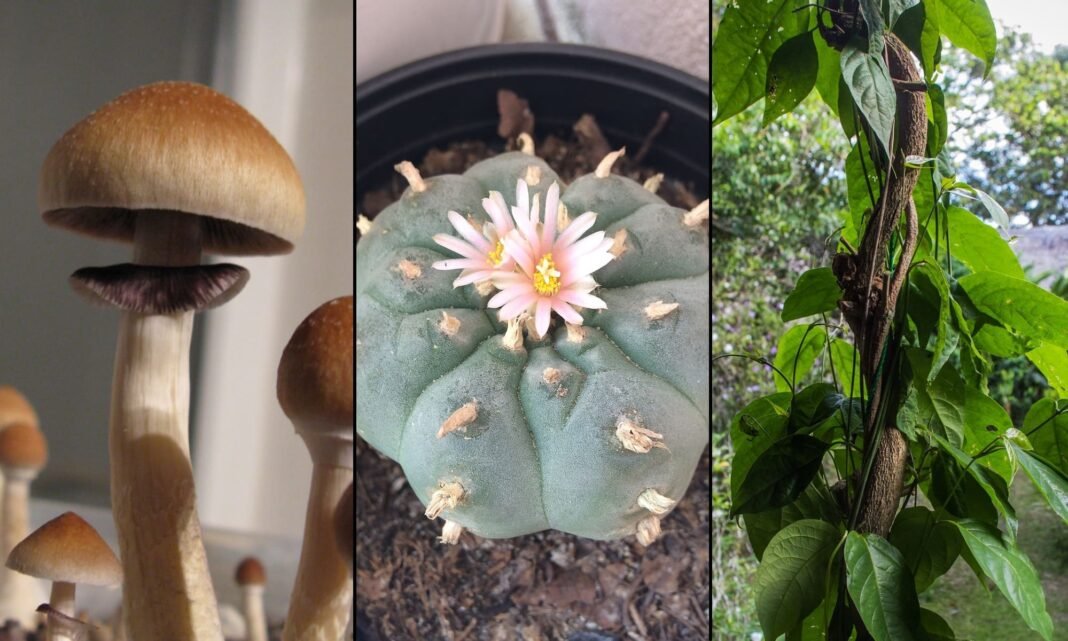

Massachusetts lawmakers approved a measure to create a pilot program regulating the therapeutic use psychedelics. Two committees held separate hearings on psilocybin related measures.
The Joint Committee on Health Care Financing approved the Sen. Cindy Friedman’s (D) pilot program bill on Tuesday, less than two weeks following its passage by the Joint Committee on Mental Health, Substance Use and Recovery Hearing.
S.1400 is not very specific, and leaves many of the details of the program to the Department of Public Health. The bill calls for an “internal pilot program for clinically suitable patients to receive monitored mental healthcare using psychedelics.”
The “on site administration” would be done by “a multi-disciplinary mental health care team within a licensed, supervised clinic setting.”
DPH would only be able to issue licenses to up to three facilities in order to study and administer psychedelics within the state. These facilities would be responsible for “establishing best practices and safety for mental health programs that use psychedelics in Massachusetts and collecting data about the effectiveness of these treatments.”
“Eligible pilot program organizations must exclusively focus operations and treatment on mental health and cannot be subsidiaries, affiliates or members of cannabis industry organizations, psychedelic molecule development companies or pharmaceutical companies,” the bill text states.
It would also be necessary for the department to create rules and regulations for the program. These include standards to meet for those who apply, ongoing patient monitoring and assessment, as well as clinical staffing.
It states that “all pilot program participants must track data on patient outcomes related to identification, diagnosis, and psychedelic treatments of depression, anxiety and post-traumatic disorder, as well as substance abuse disorder.” The department must receive these data to help refine the best clinical protocols for the use of psychedelics in Massachusetts.
Jamie Morey is the executive director and founder of Mass Healing. She said, “The bill’s progress brings the promise of healing to Massachusetts residents suffering trauma, depression and other treatment resistant conditions.”
She said: “We are grateful to Senator Friedman for recognizing the urgent need for treatment options that can help to reduce the deaths from despair, and for taking bold actions to place Massachusetts at the front of the mental health revolution which will save many lives.”
A hearing will be held on the 10th of November before the Joint Committee on Mental Health, Substance Use and Recovery to discuss the bill, and a separate proposal for a limited program piloting psilocybin alone.
Separate hearings were held on Monday to consider a proposal for a pilot psilocybin program from Rep. Lindsay Sabadosa. Also, a larger measure that would legalize and regulate adult psilocybin was proposed by Rep. Patrick Kearney.
Joint Committee on Revenue Members took on legalization while Joint Committee on Public Health looked at the pilot program for psilocybin. The members of both panels listened to testimony by experts on the therapeutic potential and criminalization implications of psychedelics, but they did not take action.
Graham Moore of Mass Healing’s educational department told the Revenue Panel that “blanket bans may actually do more harm than good.”
He said that psilocybin can help break the addiction to tobacco and improve behavioral health.
Joe McKay from Clusterbusters spoke to lawmakers to explain how the psilocybin he uses has been able to help him with cluster headaches he started experiencing following 9/11. He was among many New York City firefighters that responded to World Trade Center’s attack.
I would take the low-dose a few time a year in order to prevent attacks. I also realized that I have PTSD and had to live with it. He said that he realized he was using painkillers not to relieve physical pain but rather emotional pain.
McKay stated, “I asked for help from a therapist in the underground. Today I don’t drink alcohol anymore and haven’t taken painkillers since.” “I can say with honesty that the psilocybin has healed me both mentally and physically.”
While multiple cities across Massachusetts have enacted local psychedelics decriminalization initiatives, voters rejected a statewide ballot measure last year that would have legalized substances such as psilocybin, ibogaine and DMT for adults.
Ahead of that vote, the governor signed a military veterans-focused bill that includes provisions to create a psychedelics working group to study and make recommendations about the potential therapeutic benefits of substances like psilocybin and MDMA.
Meanwhile, the legislature’s Joint Committee on the Judiciary in July held a hearing on four of 12 psychedelics-related bills that were filed for this session, with the Massachusetts Psychiatric Society (MPS) endorsing one that would decriminalize certain entheogenic substances.
—
MEDCAN24 has been tracking the hundreds of bills relating to cannabis, psychedelics or drug policies that have passed through state legislatures as well as Congress in this past year. Patreon members who pledge at least $25/month gain access to interactive maps, charts, and hearing schedules so that they do not miss anything.
Discover more about the marijuana bills tracker. Become a patron on Patreon and you will have access.
—
Separately in Massachusetts, the state attorney general recently certified and prepared summaries for dozens of proposed 2026 ballot initiatives—including a pair that would roll back adult-use marijuana legalization in the state.
Regulators are also working to finalize rules to allow for a new cannabis consumption lounge license type, which they hope to complete soon.
The legislature’s Joint Committee on Cannabis Policy last month approved bills to provide employment protections for marijuana consumers and expand the state’s medical cannabis program, in part by adding post-traumatic stress disorder (PTSD) and opioid use disorder to the list of qualifying conditions.
State lawmakers have also been considering setting tighter restrictions on intoxicating hemp-derived products and a plan to allow individual entities to control a larger number of cannabis establishments.
Carlosemmaskype, Apollo and other photographers provided the images.
MEDCAN24 could not exist without readers’ support. Consider a Patreon subscription if our marijuana advocacy journalism is what you use to keep informed.

Sponsored Content
This informative article is brought to you by NUBO CBD →