







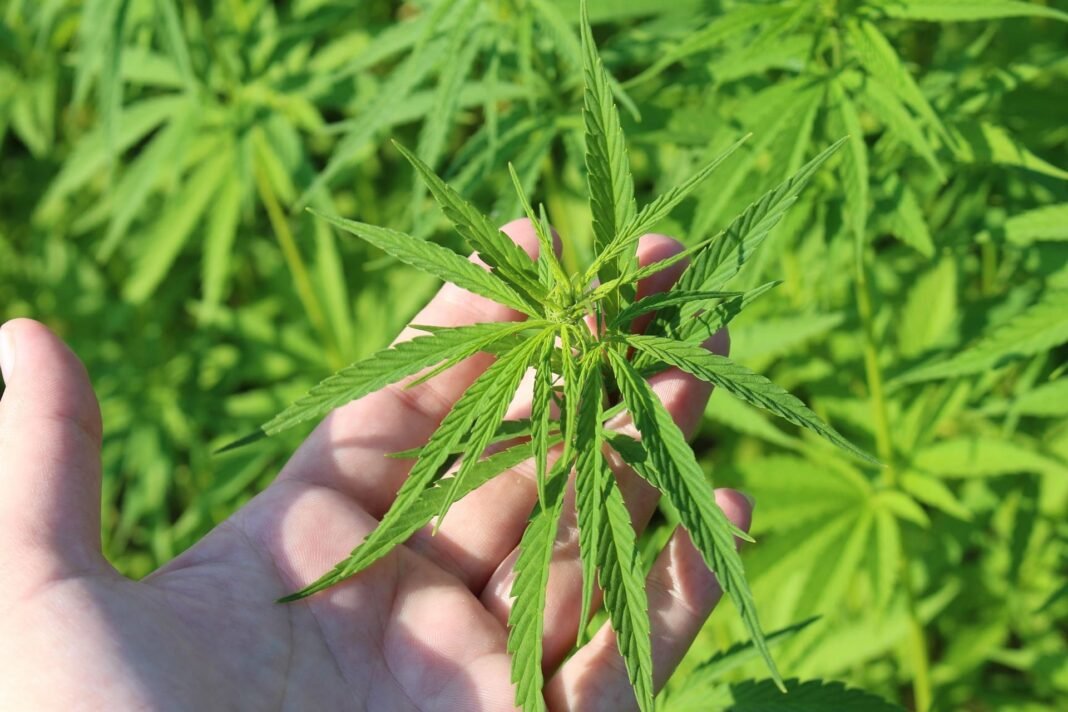

A new study funded by the federal government found that the chemical makeup of soil where the cannabis is grown has an impact on bioactive compounds.
This study gives outdoor hemp farmers information about soil quality and its impact on cannabinoid, terpene, and cbg content. It was reported in a journal article published by the Journal of Medicinally Active Plants. The researchers found that poor soil conditions resulted in higher THC concentrations, whereas better soils may have resulted in higher CBG, the precursor cannabinoid.
The findings suggest that soil management and conditions can be used to adjust the levels of cannabinoids, rather than genetics alone.
The research was supported by Penn State College of Medicine and PA Options for Wellness a medical marijuana company licensed in Pennsylvania.
Researchers aimed to compare two cannabis cultivars—Tangerine and CBD Stem Cell—grown separately with cover crops (CC) and with conventional tillage fields (CF). The authors stated that “this study specifically examines the tilth aspects of soil health, comparing the CC fields to the CF methods.” Two cultivars were planted in the same way on two adjacent fields: a conventionally tilled field and a non-till field.
A comparison of the cannabinoid content of extracts taken from hemp grown in CC soil and CF reveals significant differences.
Tangerine grown on conventional soil had cannabidiol levels 1.5 times greater than the cover cropped soil. But in the CBG Stem Cell variety, the opposite was true — CBD levels doubled in the cover crop field. CBG, the precursor to cannabinoid, was found in higher concentrations in cover crop plants, but THC was six times more abundant in tilled fields.
The terms “soil quality” and “soil health” are used in the same context. However, the term soil health is not limited to the properties of the soil. It also includes the biological characteristics of the soil as well as its ability to support life.
Scientists found that there were “significant differences” in the cannabinoid levels between cultivars and field types.
Authors note that the cannabidiolic acids levels in cannabis grown on conventionally tilled field were six times greater. “Tangerine CC extracts and 2.2x higher in CF extracts of CBG Stem Cell, cannabigerol (CBG) levels were 3.7x higher in CBG Stem Cell extracts from CC, and Δ9-tetrahydrocannabinol (THC) were 6x higher for CF Tangerine Extracts,” they wrote.
The environment where the plants are grown is what constitutes soil health. The soil’s biological life has a direct impact on the production of terpenoids (cannabinoids) and cannabinoids which the plants use to communicate, defend and compete.
The soil is a living ecosystem that contains microbes, fungi and minerals, which feed and interact with the roots of plants. Cover cropping and No-Till Farming are practices that enhance the biological web by improving carbon storage and nutrient cycle. This new study includes the chemical composition of plants in the soil-shaped factors.
The hemp plant is not a good alternative to the marijuana. [cover crop] Fields may reduce differences in the terpene contents despite differences due to genetics. This outcome adds to the growing body of evidence suggesting a relationship between the genetics of the hemp cultivar and its effect on soil nutrient uptake…”
Researchers cautioned that further research was needed to identify “levels” of enzymes capable of converting CBG in CBD, THC and CBC. This could provide clues as to why CBG concentrations accumulate in plants in fields with cover crops.
Researchers have found that cannabinoids are derived from terpenoids. They also noted genetic differences in the enzymes responsible for synthesising individual cannabinoids.
This is the only study that shows differences in extract composition in outdoor hemp grown at different soil types.
The best methods for cannabis cultivation are being studied more closely. An industrial farmer in South Dakota said earlier this year that expanding the supply chain of hemp will lead to more processing and manufacturing and reduce heat-trapping CO2.
Scientists are doing more research on various chemicals. Researchers conducted the first sensory-guided analysis of the compounds that give dried cannabis its distinctive fragrance. They discovered dozens of chemicals previously unknown. These findings extend the scientific understanding of marijuana past the commonly held beliefs about terpenes CBD, and THC.
How marijuana is handled after harvest—specifically, how the plant is dried before packaging—can have a significant impact on product quality, a study showed, including with respect to preserving terpenes and trichomes, according to a pair of recently published white papers.
Sponsored Content
This informative article is brought to you by NUBO CBD →