





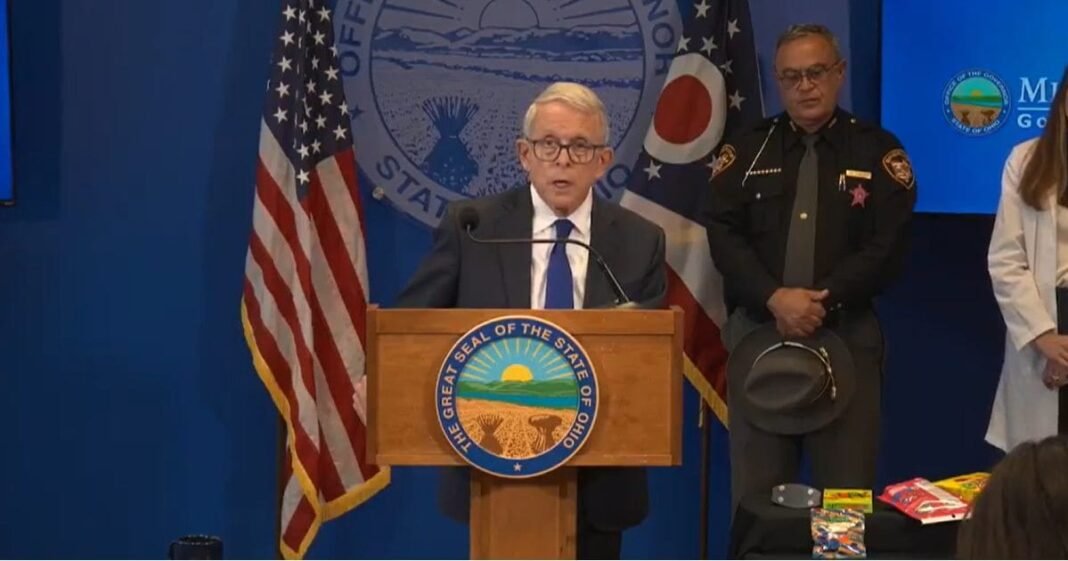

Ohio Governor Mike DeWine proclaimed a state of emergency for consumer products, and signed an executive directive that banned the sale intoxicating hemp product in Ohio during the next 90 days.
Ohio, like many states has struggled with intoxicating products made from non-intoxicating CBD derived hemp cannabinoid. In a few states, these products are not included in the state’s cannabis control programs.
In January of last year, Governor DeWine encouraged the Ohio General Assembly and retailers to take down intoxicating hemp products and to stop selling them to children. The state’s General Assembly is still working on the legislation but Governor DeWine will implement emergency rules that will last for 90-days.
The Governor has long held the Emergency Rule Authority, which allows for such changes. The Governor has declared an emergency for consumer product safety.
Ohio’s definition of hemp (and hemp-derived products) will change to include intoxicating cannabis, which makes such products illegal.
The order will take effect on the 14th of October and requires retailers to stop selling intoxicating products made from hemp. Local and state authorities can seize the products after that and fining retailers $500 per day.
Intoxicating hemp products have been shown to negatively impact the developing brains of children, but these products are sold and distributed to them in Ohio. “I signed today an executive order which takes steps to prevent these dangerous products from reaching Ohio children.
According to the Governor, the order doesn’t apply to hemp-based products that are not intoxicating and were legalized in 2019 by the General Assembly or marijuana legalized in licensed dispensaries.
“I want to again make it very clear what the voters passed in legalizing marijuana and the situation today in regard to intoxicating hemp – they are very, very different,” he said.
Ohio Poison Control Center statistics show that reported exposures to delta-8 or delta-9 THC have increased 2000% since the previous two years among those 19 and younger. It has tripled for those under five years of age.
Sponsored Content
This informative article is brought to you by NUBO CBD →