







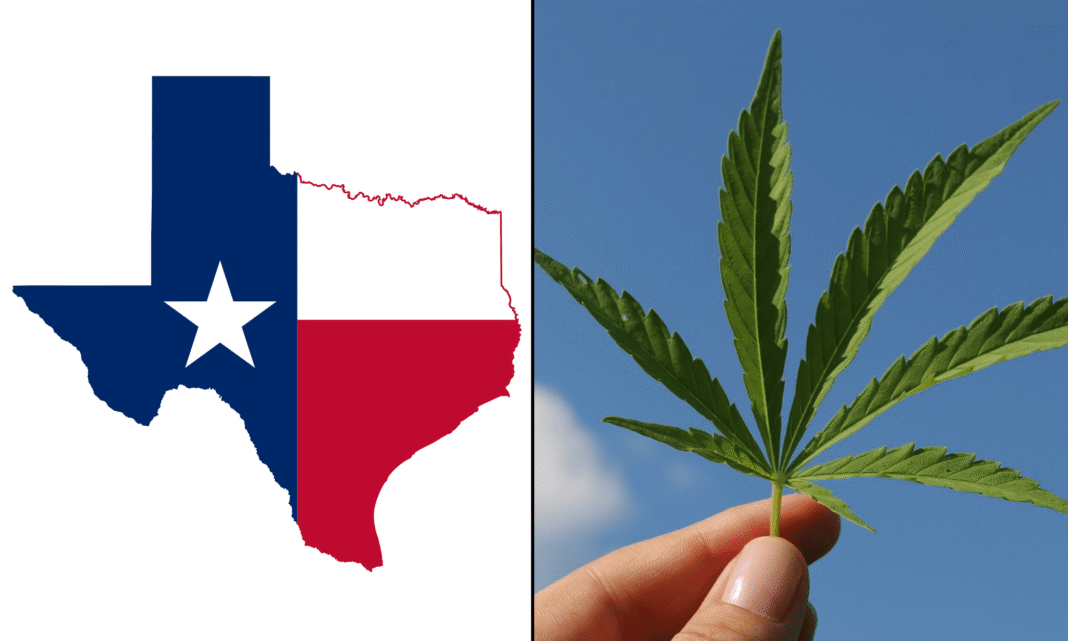

Texas has adopted formal rules for implementing a new law that significantly expands the medical marijuana program in Texas.
About two months after the Department of Public Safety (DPS) posted the proposed rules—after which point a 30-day public comment period was completed—the regulations were finalized and published in the Texas Register on Friday.
The specific rules set forth will allow for the increase of the licensed number of dispensaries. They also establish the security standards for satellite locations, and they authorize the cancellation of licenses in certain cases.
DPS will ultimately be issuing 12 new licenses for dispensaries across the state. There are currently only three. Additional licensees are selected through a competition, and officials will prioritize the public health regions of Texas to maximize access.
Nine out of 139 applicants will be eligible for the first round. They submitted their applications during a window earlier in 2023. DPS will choose these nine licensees by December 1. The applicants who did not receive a licence in 2023, and any potential licensees that are new, will get another chance to obtain their licenses during the second round, where winners will be announced April 1, 2026.
Finalized rules include security guidelines for satellite dispensaries approved by the Department. These regulations mandate that “a secure area, which is enclosed and locked, be designated within each satellite site to store low-THC products, and to provide reasonable security against theft or diversion.” They also require “a person or limited individuals to have responsibility and authority for entering or controlling entry into these secured areas.”
They also specify that regulators can revoke licenses if they fail to comply with certain policies, such as failing to have cannabis products on hand within 24 months after a license is issued, not filling prescriptions “promptly” or “accurately” or not producing cannabis in a way “consistent” with demand.
DPS received feedback from two people on its rules, which were open for public scrutiny. However, no modifications were made.
As well as increasing the number dispensaries within the state, this law was signed by the Governor and expands on the qualifying conditions of the medical cannabis in that state to include Crohn’s disease, chronic pain (including severe back or neck pain), traumatic brain injuries, Crohn’s, etc., along with allowing patients who are in hospice, palliative, or end-of life care, to consume marijuana.
The policy was changed automatically by virtue of the law, which took effect at 1 September without additional rulemaking.
Greg Abbott (R) signed the medical cannabis expansion bill in this state. The Health and Human Services Commission of Texas proposed rules last month to allow physicians to recommend new qualifying conditions for cannabis, as well as create standards for allowed inhalation devices. Greg Abbott signed the rules. Last month, Health and Human Services Commission of Texas (HHSC), a state agency that oversees health and human services in Texas, proposed new regulations to enable physicians to suggest conditions to qualify for medical cannabis and establish standards for acceptable inhalation device.
—
MEDCAN24 has been tracking the hundreds of bills relating to cannabis, psychedelics or drug policies that have passed through state legislatures as well as Congress in this past year. Patreon subscribers who donate at least $25/month have access to the interactive maps and charts as well as our hearing calendar.
Discover more about the marijuana bills tracker. Become a patron on Patreon and you will have access.
—
Department of State Health Services has recently implemented a new set of rules to help prevent underage people from buying intoxicating products made of hemp.
After similar restrictions were implemented by the Texas Alcoholic Beverage Commission (TABC) late last month, DSHS announced that they’ve moved forward with the policies changes that comply with the governor’s recent executive order on hemp.
In the same month, Texas Department of Agriculture head (TDA), reacted against “incorrect claims” made by a Republican senator about Texas’ regulatory compliance with federal laws on hemp. He did, however, hint that there may be changes coming in the future to how hemp products are measured for “total THC”. This could have a negative impact on the industry.
Abbott’s executive order was signed after two special sessions of the Legislature failed to pass an controversial bill banning hemp products that contain THC. The governor had vetoed a similar measure in the past year.
A recent poll conducted by a GOP-affiliated pollster found that Texas Democratic voters and Republican supporters are united in opposing the proposed hemp ban.
AnonMoos. Image element.
MEDCAN24 would not be possible without the support of readers. Please consider making a Patreon monthly pledge if you depend on our cannabis journalism for information.

Sponsored Content
This informative article is brought to you by NUBO CBD →