








In the midst of a bipartisan effort to find a compromise on federal spending, and how to resolve a debate that is becoming increasingly heated about hemp-based products, various interests have voiced their opinion on what they believe Congress should do.
A GOP senator hopes to change a proposed prohibition of hemp THC-based products to a different language that would mandate a state study on the regulatory model for cannabinoids consumed by consumers. Meanwhile, state attorneys general have taken steps to encourage Republican leadership to implement an outright ban on intoxicating goods.
Although the House still hasn’t passed their version of agriculture funding legislation, the Senate combined it with the appropriations bill that covers the defense branch and legislative branch into what is called a “minibus”. The House requested and named negotiators last month despite the fact that its companion bill had not been passed by the chamber.
There haven’t been any formal Senate meetings, nor have there been conferees appointed. However, it has emerged that some appropriators were informally discussing the relevant topics. A GOP senator wants to jump ahead of negotiations on hemp.
Sen. Rand Paul (R-KY)—a longstanding champion of cannabis reform who previously blocked a hemp ban from being included in an agriculture appropriations bill passed by the Senate earlier this year—is circulating legislative language, obtained by MEDCAN24, that he’s asking to be adopted as part of the final package.
The U.S. Department of Agriculture would be required to examine “best practices” in regulating cannabinoid-containing products that are intoxicating and to submit to Congress a report on the findings.
The full language is:
“SEC.____. “SEC.____.
The Secretary of Agriculture in consultation with States shall not wait more than 18 months from the date the Act is enacted to conduct a study and report to Congress on results relating to best practices by States regarding regulation of products derived from hemp for domestic and personal usage.”
MEDCAN24 contacted Paul’s Office for a comment. However, a representative wasn’t immediately available.
In the beginning, the Senate agriculture measure passed over the summer contained provisions that hemp stakeholders claimed would “eliminate” the hemp market. They said this by prohibiting consumable hemp with any amount of THC. Paul removed the THC-related language after it was passed out of the committee.
Sen. Mitch McConnell (R-KY), who ushered in the federal legalization of hemp under the 2018 Farm Bill, championed the THC criminalization language and took to the floor to criticize those who opposed the ban, including Paul.
McConnell doesn’t seem to be the only Republican pushing for an extension of this ban. The group is sending a letter to the GOP leadership in the House and Senate Appropriations and Agriculture Committees, asking for the ban to be included. They claim that the current Farm Bill has been “misused by bad actors” to promote recreational synthetic THC across the nation.
—
MEDCAN24 has been tracking the hundreds of bills relating to cannabis, psychedelics or drug policies that have passed through state legislatures as well as Congress in this past year. Patreon members who pledge at least $25/month gain access to interactive maps, charts, and hearing schedules so that they do not miss anything.
Discover more about the marijuana bills tracker. Become a patron on Patreon and you will have access.
—
The draft document omits the names of the signatories, but the content cites data from Indiana—and the Republican state attorney general there, Todd Rokita, previously led a separate letter with 20 of his counterparts from other states urging Congress to take action on intoxicating cannabinoid products.
The new draft of the letter obtained by MEDCAN24 says: “We request that Congress clarify its federal definition of hemp in the fiscal year 2026 appropriations or the reauthorization process of the Farm Bill, to ensure that there is no confusion that the sale and manufacturing of these harmful products, as well as their illegality, are crimes.”
Hemp stakeholders have “nefariously misinterpreted” the Farm Bill as allowing low-concentrations of delta-9 derived from hemp, and its silence on hemp-derived THC other than delta-9. They claim the Farm Bill permits them to sell and produce various synthetic cannabinoids without regard to the chemical’s potency or psychoactive effect. In this way, hemp that is legal and non-intoxicating, but contains THC, can be used to create Frankenstein THC products, which get adults high, and may even harm or kill children.
We commend you for your dedication to American farmers, and the work that you have done to establish a well-regulated and orderly market for hemp products and industrial hemp. Do not let irresponsible companies take advantage of the good work you have done to distribute dangerous products within our States. “We ask Congress to take decisive action to clarify the Farm Bill definition of hemp in order to remove THC-containing products from the market.”
MEDCAN24 sent a comment request to Rokita’s Office, but it was not answered immediately.
House agriculture spending bills approved by Appropriations Committee include provisions prohibiting consumable products containing any “quantifiable amount” of THC. However, it hasn’t been discussed on the House floor.
Hemp stakeholders don’t know where they stand on the issue as legislators try to finalize legislation. They are calling for supporters to call their elected representatives to express their disapproval of a blanket prohibition.
The U.S. Hemp Roundtable stated in an email that “no one knows exactly what the final design will look like. It is also uncertain whether the minibus it self will ever see daylight.”
The document says, “If your customers, business associates, social media friends, or other contacts have not been informed that hemp is likely to be banned in the future, it’s time.” It says: “We still have time to do something about this.
Meanwhile, Paul recently filed a standalone bill that would go in the opposite direction of the hemp ban, proposing to triple the concentration of THC that the crop could legally contain, while addressing multiple other concerns the industry has expressed about federal regulations.
He introduced legislation in June entitled the Hemp Economic Mobilization Plan Act. It mirrors versions he’s sponsored over the last several sessions.
Below is the draft of the letter from the Attorney General’s Office on Hemp.
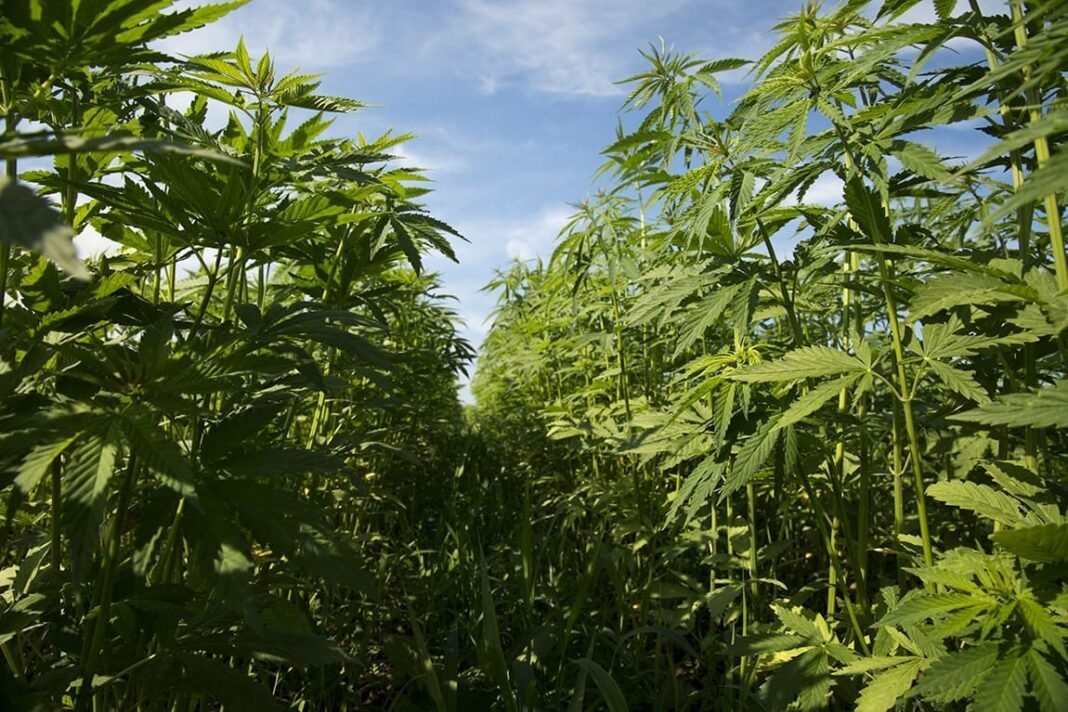
Brendan Cleak provided the photo.
MEDCAN24 would not be possible without the support of readers. Consider a Patreon subscription if our marijuana advocacy journalism is what you use to keep informed.

Sponsored Content
This informative article is brought to you by NUBO CBD →