







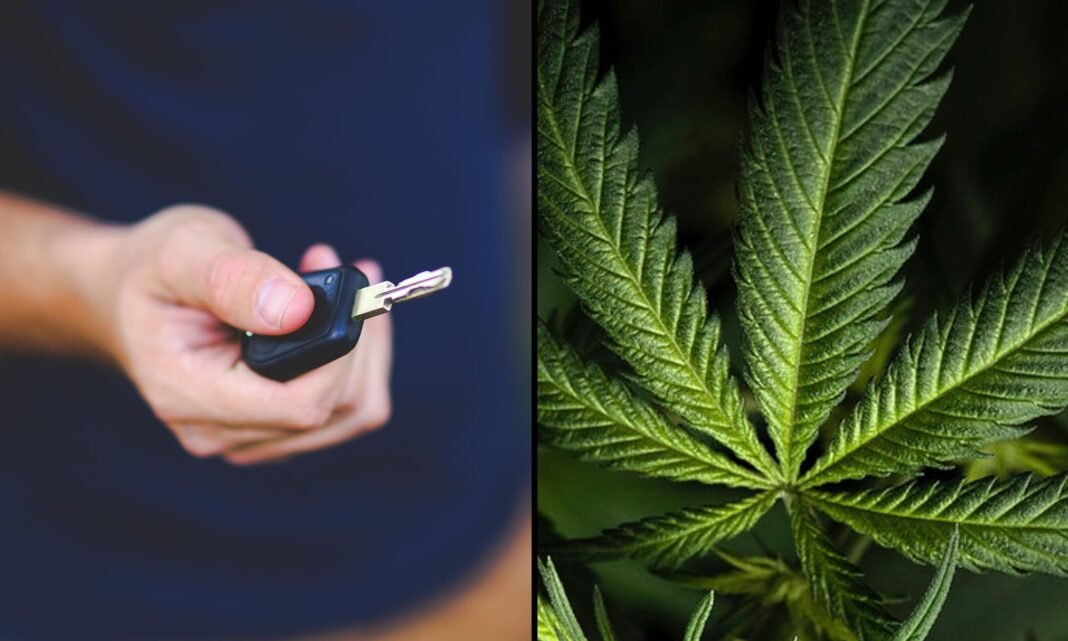

A new study shows that laws aimed at stopping marijuana-impaired drivers in nearly 20 states cause innocent people to be jailed and criminalized for driving while impaired, even if they show no sign of impairment.
To reduce the number of drugged drivers, legislators and regulators have been using a strategy that has worked well for alcohol enforcement. They set a limit on THC levels in bloodstream above which they presume a driver to be impaired. This is commonly called a “per se” amount.
But the new study suggests that approach may be badly misaligned with the science related to impairment from cannabis, the components and metabolites of which can remain in the body day or weeks after use—when impairment is no longer an issue.
The study found that “many cannabis users who are regular exceed the zero tolerance cut-off and THC per se concentrations for days after the last time they used the drug, putting them at risk of legal penalties despite not showing any signs of impairment.” It was published by Clinical Chemistry, a scientific journal, and funded in part by the National Institutes of Health, as well as the State of California.
These findings are consistent with earlier studies that showed a weak or inconsistent link between THC levels in the blood and accident risk. According to large studies, marijuana usage may have a slight increase in collision risks but the effects are much smaller than those of alcohol.
The researchers noted that THC pharmacokinetics differ from ethanol.
They noted that THC, due to its lipophilic properties, can still be detected up to 30days after the last consumption.
Researchers studied 190 heavy cannabis consumers, who were asked to refrain from using the drug for 48 hours. The blood THC level of the participants was measured before and following cannabis consumption. The participants were observed in a driving simulation.
“Current cannabis blood concentrations used to identify impaired drivers could land innocent people in jail,” the Association for Diagnostics & Laboratory Medicine, which publishes the journal that the study appeared in, said in a press release.
Cannabis blood limits lack scientific credibility, and they aren’t an accurate indicator of whether drivers should be charged with a crime or not.
Authors of the study conclude that more work is needed to identify cannabis-impaired drivers and those who drive dangerously.
According to a journal press release, “despite evidence that shows no correlation between driving impaired and THC detection in blood, 6 US states use 2 or 5 ng/mL THC concentration as a threshold for driving under influence of marijuana, whereas 12 other states have zero-tolerance laws.”
The authors from the University of California San Diego, and Center for Medicinal Cannabis Research, cautioned about the need for more research, saying that “for now, the most effective protocol is a mix of observations made in the field, and toxicology test.”
Separate research conducted last year concluded that “there is no evidence to support the claim that legalizing marijuana increased tolerance and attitude towards driving following marijuana use.” The study was conducted by researchers from Nationwide Children’s Hospital in Ohio and Ohio State University. They used data from the national traffic safety survey.
In an interview earlier this year, the now confirmed nominee of President Donald Trump to head a federal agency responsible for traffic safety said that he was prepared to ‘double down’ on raising awareness regarding the dangers associated with marijuana-impaired drivers in collaboration with the White House.
Sponsored Content
This informative article is brought to you by NUBO CBD →