







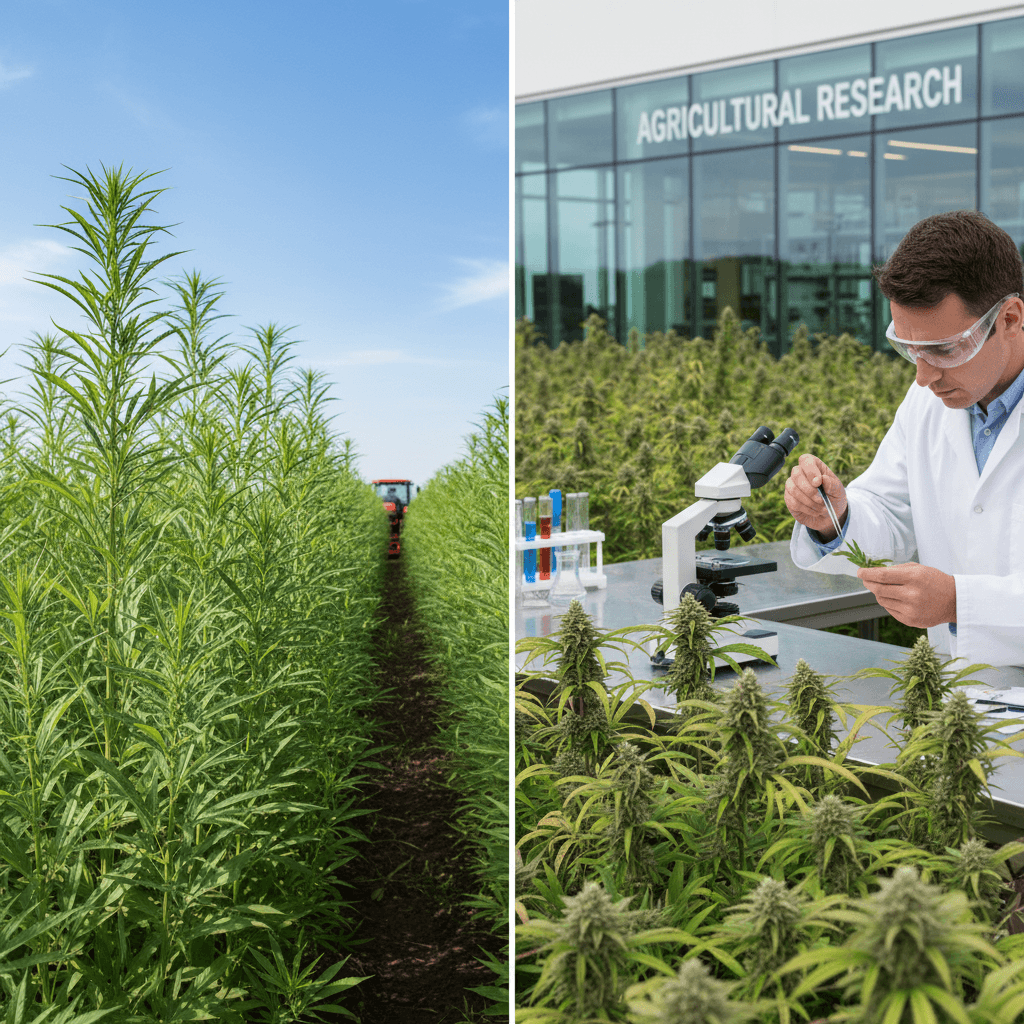

U.S. House of Representatives passed a Farm Bill version, formally called the Farm, Food, and National Security Act of 2020, that introduces a separation formal between industrial hemp crops (fiber and grains) and cannabis-linked crops. The measure passed in a 224–200 vote, aligning farm-level regulations with previous congressional actions to address the market for intoxicating hemp products, according to Hemp Today. The 2018 Omnibus Agriculture Law, which was repeatedly extended by the previous administrations of Congress in 2018, is being replaced with this legislative package.
This bill draft maintains the regulatory approach of treating hemp as a crop with controlled risks, which is different from the commodity classification used for other U.S. major agricultural products. The framework is designed to narrow the supply chain upstream for CBD, while also adjusting the compliance requirements of industrial hemp grain and fiber producers.
Cannabinoid Hemp Regulations Changed
The most important change for producers who grow hemp to extract cannabinoids is the new THC test method. The new rule mandates testing for total THC, which includes tetrahydrocannabinolic acid (THCA), rather than solely delta-9 THC at the time of sampling. The change was made to take into account the transformation of THCA into THC in the drying and process phases. This closes a regulatory gap that had allowed certain crops to initially pass tests, but then exceed the 0.3% THC federal limit.
These are some of the implications that this new testing protocol will have.
- There are fewer cannabinoid raw materials compliant.
- Crop risk increases for cultivators
- Traceability standards are tightened throughout the entire supply chain.
The upstream availability of hemp flowers and the material used to produce CBD, as well as other derivatives will be constrained by these factors. The bill doesn’t resolve the core issue of finished products. FDA retains control over safety, dosing, marketing, and labeling. The bill does not change or delay the timeline for enforcement of hemp-derived intoxicating product in November 2026, as set forth by the 2025 budget law. It targets synthetic cannabinoids and chemicals.
Hemp and Grain Fibers for Industrial Use
The Farm Bill also aims to simplify processes for operators of industrial hemp grain and fiber, but this is coupled with new documentation and control requirements. The Farm Bill requires that growers who want to be classified as “industrial hemps” provide proof their product is suitable for industrial purposes. Documentation may include seed tags certified by the USDA, contracts for sales, Farm Service Agency files, or harvesting methods. The full testing regime will apply to producers who are unable to produce such proof.
Other provisions that reinforce the unique regulatory system of industrial hemp are:
- The 10-year criminal ban on controlled substances convictions is relaxed for industrial hemp producers.
- The introduction of specific penalties (a five year program ban) to punish those who knowingly misrepresent crops as being industrial hemp.
- The requirement to produce laboratory certification of analysis in the case of non-compliant crops destroyed.
- For industrial hemp, states can opt for a lighter touch of compliance, such as allowing visual inspections, using certified seeds or performing performance-based samplers instead.
- In consultation with Drug Enforcement Administration, the USDA will play a role in the accreditation of hemp laboratories.
In the House draft, hemp is integrated into a legal structure tightly linked with law enforcement. A model that has never been used for other U.S. major crops. It is expected that this approach will continue, as a result of the response by the government to the growing number of hemp products with high intoxicating properties.
Future Legislative Frameworks
There are other proposals being discussed to deal with the issue of unresolved regulation regarding cannabinoids. The proposals of Oregon Democrat Sen. Ron Wyden and Kentucky Republican Rep. Andy Barr (Cannabinoid Regulation and Safety Act) are notable for their efforts to define CBD and regulate hemp products that cause intoxication. Both proposals aim to reduce intoxicating hemp products. However, Barr’s would drastically narrow the market for cannabinoids, while Wyden’s visions a more regulated federal system.
Disclaimer: The information contained in this article is not intended to be a substitute for medical advice. Hemp Gazette makes no medical diagnoses, recommendations or treatment plans. Consult a healthcare professional before you make any decision regarding your health. Therapeutic Goods Administration of Australia has not evaluated statements about the therapeutic benefits of cannabinoid products, hemp or cannabis. TGA regulations allow Australians to access medical cannabis through prescription.
Sponsored Content
This informative article is brought to you by NUBO CBD →