






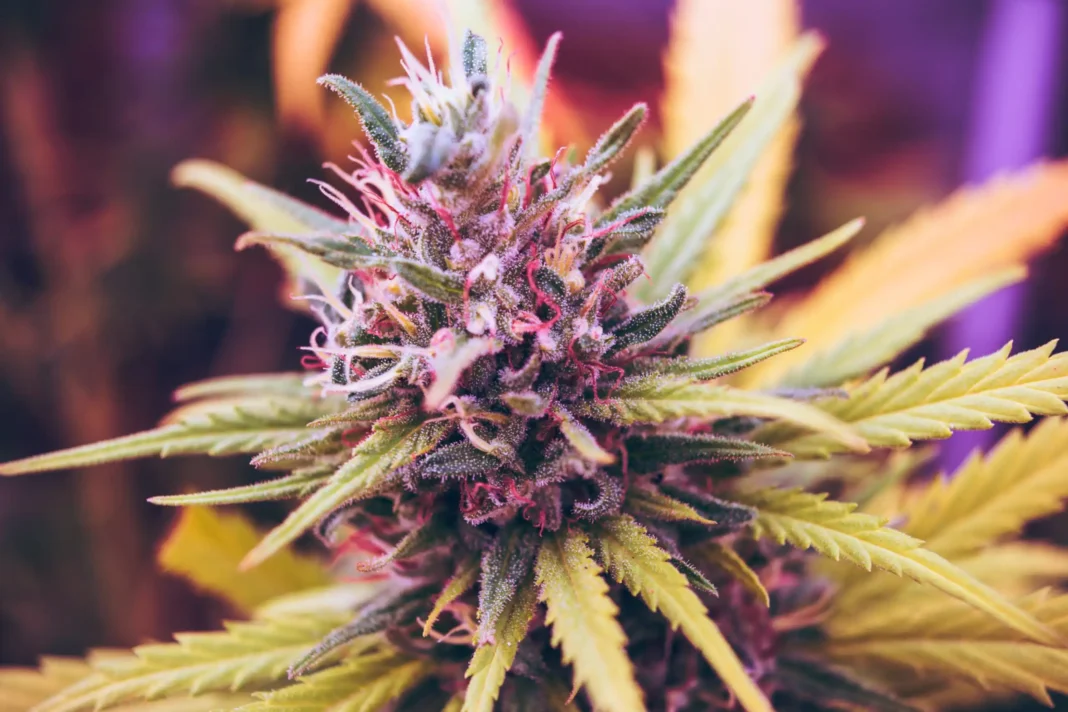

Medical marijuana helps women with endometriosis achieve long-term improvements in their symptoms while also reducing the use of opioids, according to a new study.
Using cannabis-based medicinal products (CBMPs) “was associated with sustained improvements in pain, health-related quality of life, sleep, and anxiety at 24 months,” the research found. Cannabis was also “well-tolerated” by the majority of patients, showing a “favourable”, adverse event profile.
Additionally, the study showed a reduction in prescribed opioids at 18 and 24 months—”including a clinically significant reduction in 26.1% of participants at 24 months,” the researchers wrote.
The study included 101 women who were diagnosed with endometriosis. This chronic condition is characterized by tissue that looks like the lining of a womb, but grows outside. This disease can lead to pain, scarring and difficulty getting pregnant.
“Across 24 months, improvements were observed in measures of pain severity, its impact on health-related quality of life (HRQoL), sleep, and anxiety.”
Before joining the study, all participants were registered with the UK Medical Cannabis Registry. Data was collected at the launch of the research and again 1, 3, 6, 12, 18 and 24 months later using a series of patient self-report surveys.
“Mean prescribed [oral morphine equivalent] decreased from 19.9 ± 17.2 mg/day at baseline to 14.8 ± 15.9 mg/day at 24 months.”
The study—conducted by researchers affiliated with Imperial College London, Curaleaf Clinic in London, George’s Hospital NHS Trust, North Bristol NHS Trust, Cardiff and Vale University, Kings College London and South London & Maudsley NHS Foundation Trust—was published in the Australian and New Zealand Journal of Obstetrics and Gynaecology.
Women who participated in the study chose a variety cannabis product formats, including vape cartridges and topical ointments. They also used sublingual oils, oral pastilles, and topical ointments.
“In conclusion, this prospective registry study demonstrated improvements in pain, health-related quality of life, sleep quality, and anxiety following CBMP initiation in patients with endometriosis, with benefits sustained to 24 months and a favourable adverse event profile,” the researchers wrote.
They cautioned that the study’s observational nature, and lack of control groups, limits it. It does not show causality between marijuana use and symptoms. The researchers also stated that it was likely there had been selection bias “due non-randomised recruiting through a self-paying private clinic.”
In a previous study, published in 2024, women rated cannabis the “most effective self-management” strategy for reducing endometriosis symptoms.
This research concluded that cannabis use led to a significant improvement of symptoms, which went beyond pain management. A majority of users were also able reduce their pain medication consumption.
The governor of Illinois signed a law adding endometriosis to the list of qualifying conditions for medical marijuana.
Sponsored Content
This informative article is brought to you by NUBO CBD →