







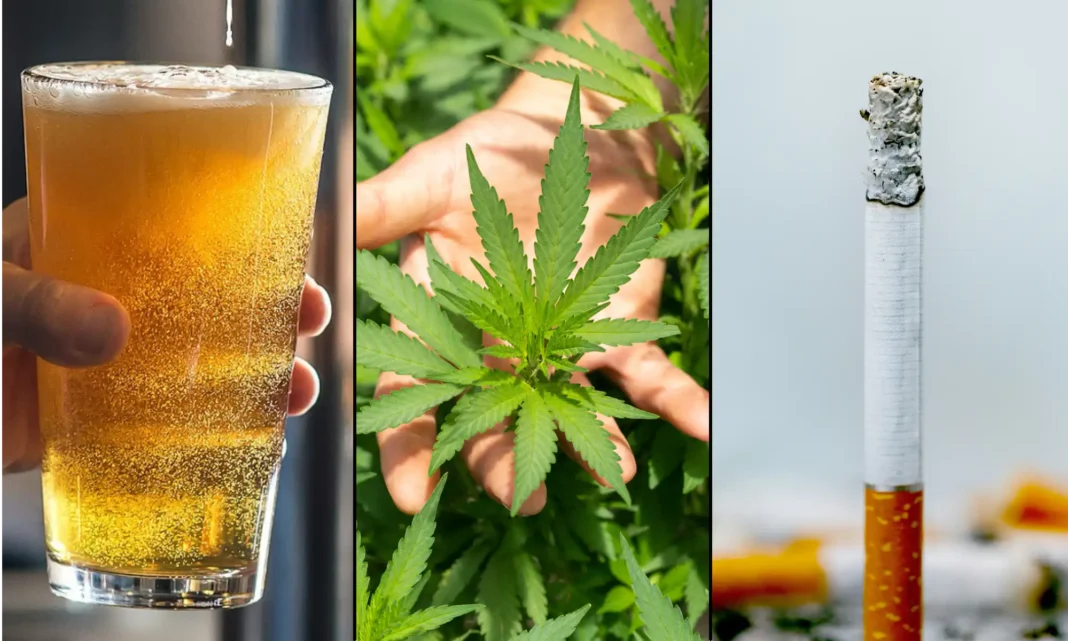

A new study funded by the government found that alcohol and cigarettes cause more harm to those who consume them as well as to society in general than marijuana.
The panel consisted of twenty experts who have professional experience dealing with issues related to substance abuse. They were asked by the researchers to score each drug on a range of 0 to 100%.
The study published in Journal of Psychopharmacology found that alcohol caused the greatest harm, with an overall cumulative score of 79. The study found that alcohol was the most harmful substance, with a cumulative weighted score of 79.
This analysis was funded by the Canadian Institutes for Health Research and concluded that the biggest danger of marijuana is not its effects on users, but rather, it’s illegal market.
The paper by an international team of researchers affiliated with research institutes in Canada, United Kingdom, and New Zealand states that “Cannabis scored highest for criminal activities.” Although more than 70 per cent of Canadians now purchase cannabis from legal sources, organized crime groups play a major role in the illegal cannabis market.
Marijuana—which was legalized nationally in Canada in 2018 but remains federally prohibited in the U.S.—is not completely without harms to consumers, however, with the study finding that it “also scored relatively high for mental harms to users (dependence, withdrawal, short- and long-term impairment of mental functioning), ranking third in that combined category.”
Alcohol, which in the U.S. is legal, ranked as the number one harm category in all 16 harm categories, including drug-related physical damage, withdrawal symptoms, mental impairment, mental impairment over a longer period of time, relationship loss, tangible loss, injury and other social repercussions.
“This analysis of drug harms in Canada found that alcohol causes the most harm overall… Alcohol was followed by tobacco, nonprescription opioids (like fentanyl), cocaine, methamphetamine, and cannabis.”
The researchers found that Tobacco “ranked as the first harm category in four out of sixteen categories, including death due to drug use, physical damage caused by drug abuse, dependency, and damage done to the environment.”
The paper concludes by urging governments to “consider the harm—both individual and societal—caused by drugs and by the laws and regulations that govern them” when developing drug policies.
The findings about relative harms of different substances may help explain why alcohol consumption—and particularly tobacco use—have been gradually declining over recent years, and why multiple surveys and studies have indicated that more adults are opting for marijuana.
For example, recent polling shows that younger Americans are increasingly using cannabis-infused beverages as a substitute for alcohol—with one in three millennials and Gen Z workers choosing THC drinks over booze for after-work activities like happy hours.
A survey conducted in October last year found that the majority of Americans consider marijuana to be a healthier alternative than alcohol. Most Americans also believe that cannabis will be legalized in all fifty states by the end of this decade.
Smoking marijuana is also associated with “significantly” reduced rates of alcohol consumption, according to a recent federally funded study that involved adults smoking joints in a makeshift bar.
A study published in 2024 that looked at adults who drink cannabis-infused beverages found more evidence of a “substitution effect,” with a significant majority of participants reporting reduced alcohol use after incorporating cannabinoid drinks into their routines.
An international study published in September identified “a strong negative association” between smoking tobacco and the legal sale of medical marijuana. It also indicated a possible “strong substitution effect” when people use cannabis, where allowed, instead of cigarettes.
A recent study has concluded that cannabis may not be as harmful as it is currently classified.
Sponsored Content
This informative article is brought to you by NUBO CBD →