






The short answer to the question “Where does marijuana grow naturally in America?” is that it does not. Cannabis does not typically grow in the U.S. the same way as a native plant. Most people refer to “feral cannabis” or “ditch weed”, which are cannabis plants that have grown wild in certain parts of the United States. Government biology document Cannabis sativa describes Cannabis sativa Naturalized populations of hemp in North America are largely concentrated in regions where the plant was historically grown.
That distinction matters. In America, wild-looking marijuana is not always a sign of a pristine native marijuana eco system. It’s more likely the remnants of hemp cultivation, particularly in parts of the Midwest and Northeast. Many modern extension and research programs continue to track these populations because of their potential genetic characteristics for adapting and breeding.
Cannabis in the U.S. : Native, but not truly naturalized
Cannabis has become naturalized in America, but it’s not indigenous. If people are asking where marijuana is naturally grown in the U.S. then the answer that they should give them would be: mainly in places where there was a hemp industry in the past and where the escaped plants survived in disturbed habitats.
Wild Cannabis or Feral Cannabis is most likely to be found in the following locations
There is strong evidence that the Midwest region of the United States has the most feral marijuana. The 2024 Ecological Study of Midwestern Feral Cannabis Cannabis sativa Highlights priority areas for collecting germplasm in Indiana and Illinois. Kansas, Missouri, Nebraska.
Sources from the state and universities confirm this. University of Wisconsin publically asked residents for help in finding feral hemp population across Wisconsin and the surrounding states.
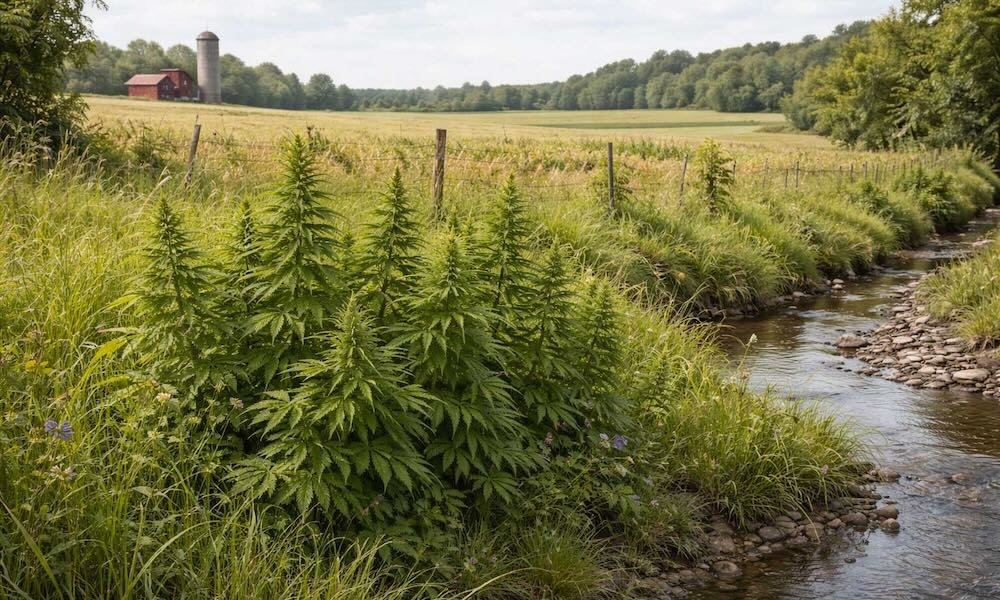
Missouri offers one of the most obvious examples at the state level. University of Missouri publication states some Missouri regions still have wild populations of hemp and that counties which grew hemp during the 1800s, are also the places that wild hemp is found today. These plants are often found on river floodplains and stream bottoms. They also grow in waste grounds, wastelands, and other open spaces.
Iowa sources describe a similar pattern. Iowa State states that wild hemp can grow in disturbed areas such as ditches or other habitats. This could even cause cross-pollination problems for hemp farms.
What Kind of Places it Tends To Grow
Wild cannabis is more likely to be found in areas that have been disturbed by humans than in remote wilderness. In the Midwestern study, suitable habitats were found near well-drained disturbed soils or riverbeds that are low lying and have been well-drained. That helps to explain why ditches edges, floodplains stream corridors abandoned agricultural land and railroad tracks can be so common.
This pattern is also consistent with older agricultural histories. Hemp used to be widely grown for wartime and fiber needs. Some of the old populations have escaped and reproduced, and are still present. They became known as ditch weed over time. Researchers still find these populations to be important, because they have adapted over the years and may contain traits breeders could use.
The Midwest is Important
This isn’t just a coincidence. The Midwest’s importance is not a coincidence. It stems from the history of hemp cultivation in the United States and climate conditions which allowed escape cannabis plants to survive. According to the government’s biology reference, the naturalized area is mainly in the Midwest and Northeast where hemp has historically been cultivated.
This is the reason why research and extension materials often mention states like Missouri, Illinois and Indiana. They also include Kansas, Nebraska and Wisconsin. It is important to note that these aren’t just locations where marijuana can grow, but places where the escaped hemp population has had time to become naturalized.
Can Wild Cannabis in the United States be compared to modern Marijuana?
Not often. In the United States, most feral cannabis populations are more closely related to hemp strains than carefully bred modern marijuana cultivars with high THC. In practice, the so-called “ditchweed”, or cannabis grown to sell on adult-use markets and medical marijuana, is usually lower-potency. Due to this, breeders and farmers tend to focus on wild populations’ genetic characteristics and potential pollination problems rather than flower quality. Missouri Extension states that wild hemp pollen can cause cannabinoid level to be reduced in CBD plants nearby.
While the headline may say “marijuana”, the actual scientific terminology used within the article will usually be wild cannabis (also known as feral Cannabis or hemp), depending on the context.
Can legal cannabis cultivation change the answer?
It’s not true. Cannabis can now be grown legally in certain areas, but the fundamental botanical stories of its growth are not altered by modern legalization. The DEA continues to run a national eradication campaign targeting illicitly cultivated marijuana, separate from older issues of feral populations. Only in 2024, millions of outdoor and indoor illegally-cultivated plants were eliminated nationwide.
It is possible to have two different things at the same time: the U.S. can both cultivate cannabis illegally or under regulation today and also naturalize feral populations of the plant in the past. Both are closely related but not identical.
Why this topic still matters
It’s not trivial. Feral cannabis is important to farming, seed quality, hemp management and breeding. Wisconsin researchers have been actively searching for these populations. Recent genetic studies point to the potential value of escaped U.S. naturalized feral populations in future crop improvements.
Readers interested in cannabis cultivation, seed history or botany will find this book more than interesting. This is all part of a larger story about how marijuana moved throughout American agriculture, and the remnants from that time still exist in today’s landscape. Many readers who are researching genetics and cultivation end up consulting platforms that focus on cannabis seeds, along with legal references and botanical information.
Final Answer
The most accurate answer in one sentence is: Marijuana doesn’t grow wild in most parts of America, however, feral cannabis or “naturalized” cannabis does. This is especially true in areas like the Midwest and the Northeast. Hemp was traditionally cultivated in these regions.
Sponsored Content
This informative article is brought to you by NUBO CBD →