







Cannabis’ agricultural significance in China is more extensive than thought. A recent study places the crop alongside rice and barely as “the five grain” that formed the basis of ancient Eurasian culture and were “deeply embedded into daily life.”
In the Journal of Archaeological Science study, Shandong University researchers extracted and analysed phytoliths from 132 samples taken in Beitaishang, Qianzhongzitou, and Beitaishang, settlements that date back to Late Neolithic times. By that time, the results revealed that cannabis had been a staple crop for northern China and was used as food or fibre.
The study authors—who also listed affiliations with the Chinese Ministry of Education, the Institute of Cultural Relics and Archaeology of Shandong Province and other institutions in China—said the samples they analyzed “suggest that cannabis had been systematically integrated into the local agricultural economy, becoming a key component of the core crop assemblage in northern China by at least the Late Neolithic.”
By the Late Neolithic period, Cannabis was a major crop grown in Northern China. It is primarily consumed as food and fiber.
The fact that samples of cannabis were taken from small to medium sized settlements and archaeological sites in Shandong, such as floors, ash pits, foundations, etc., provides valuable insights on the role of marijuana in local agriculture.
According to the study, the discovery of cannabis among these ancient features indicates “daily consumption and seed processing activities in the home.”
The Beitaishang Site had cannabis phytoliths in 22 of 32 samples (68%), from the Longshan Period. It says that at the Qianzhongzitou, “Cannabis phytoliths have been identified in 47 of 65 samples (72.3%) of the Longshan Period and 16 of 31 samples (51.6%) of the Yueshi Period.”
“Our study demonstrates that cannabis had already become one of the ‘five grains’ (rice, millet, barley, soybean, and cannabis) since the Longshan period in Shandong, as evidenced by systematic phytolith analysis. Analyzing the archaeological context revealed that cannabis consumption and processing were integral to the everyday lives of its inhabitants. It was an essential component in their agriculture subsistence. This discovery fundamentally undermines the prior underestimation based only on organic remains of cannabis and confirms its importance in the prehistoric agriculture of north China.”
The study—funded by the National Social Science Foundation of China, which is part of the country’s Ministry of Science and Technology—suggests that “cannabis processing and consumption were deeply integrated into daily life,” the researchers said.
These latest discoveries “reflect clearly differences both in unearthed contextual and plant parts emphasizing the daily and subsistence use of cannabis” in Shandong.
The study concluded that “this study is focused on fibre-type marijuana for experiments and analyses, because the drug-type of cannabis in most countries is heavily regulated due to the psychoactive components,” And to that point, one of the study authors, Yong Ge, told Marijuana Moment in an email that the researchers “stand against the abusive use of cannabis as a drug.”
She said, “In this respect, we fully agree with China’s position on drug control.”
China’s anti-drug policy has also been extended to hemp with low THC and derivatives such as CBD. For example, in 2024 the U.S. Department of Agriculture informed stakeholders of a change of policy in China which imposed stricter regulations on CBD, even though the USDA said that it was expected that the new rules would benefit the industry.
In 2023, an article published in the European Journal for Chemistry traced “thousands” of years of interaction with humans, noting that the plant was a source for fiber, nutrition and medicine as well spirituality, pleasure, and enjoyment.
A 2020 study found cannabis resin in an alter of a temple built in around 750 BC. This was part of the cultic rituals used by a biblical tribe from Israel.
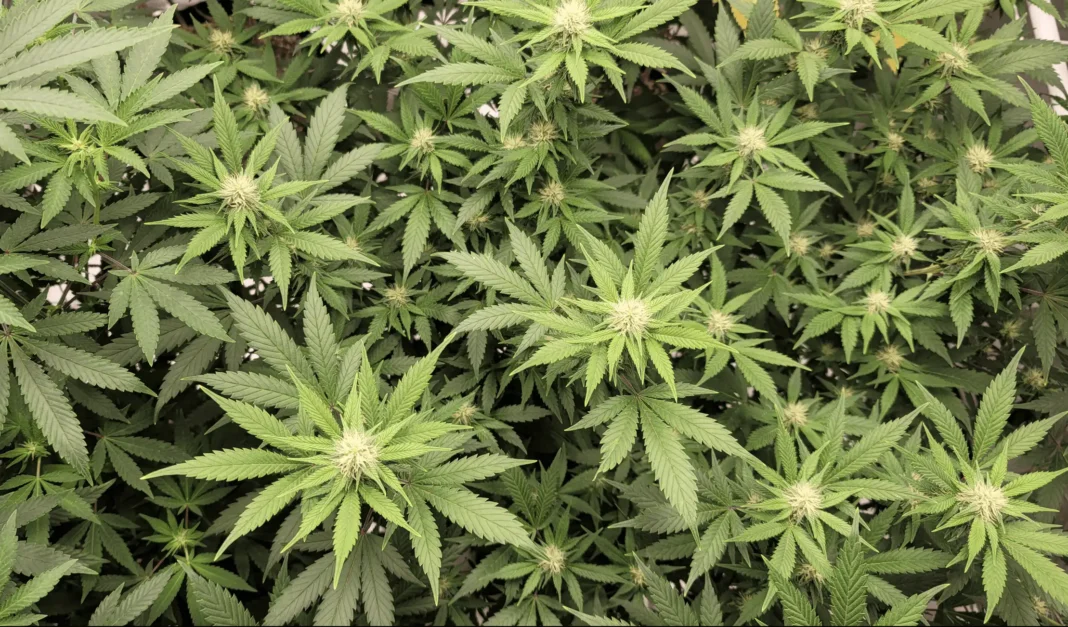
Mike Latimer provided the photo.
Sponsored Content
This informative article is brought to you by NUBO CBD →