






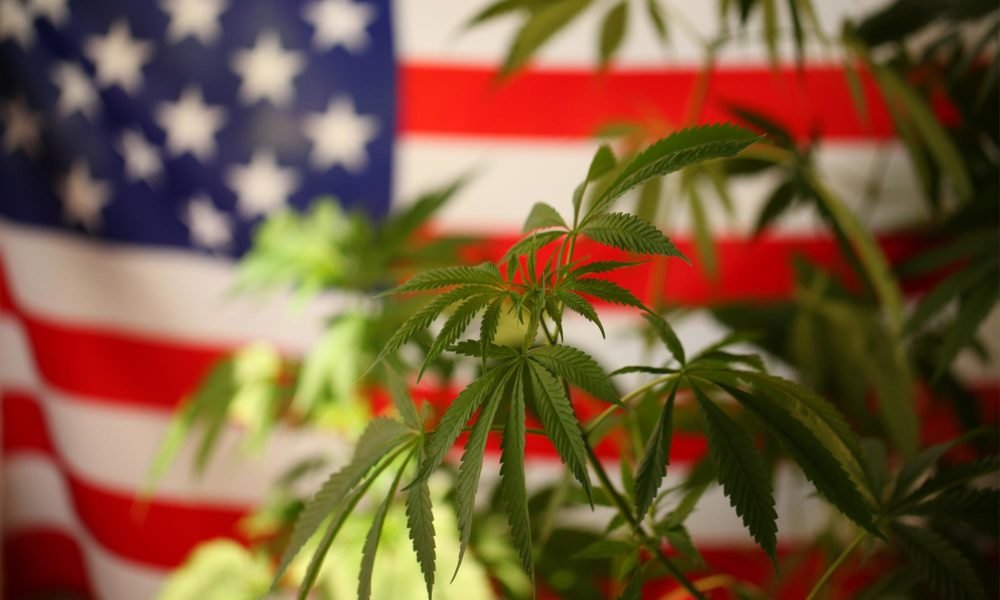

There was a moment—not long ago—when industrial hemp stood for something real: a second chance for American farmers, a new industrial base, and a pathway to rebuild rural economies. When Donald Trump signed the 2018 Farm Bill—containing the Hemp Farming Act championed by KY Senator Mitch McConnell—the intent was clear: restore a legitimate agricultural commodity and let its component parts compete.
That promise is not lost—but it is at risk.
We’ll start by looking at what works. Across the country, hemp farming is growing—and it’s working for farmers. Recent data show a strong expansion in double digits, and growth rates that exceed 30% per year. This is important. This signals real demand and adoption. It also indicates real opportunities. Beyond that, the broader economic potential—particularly in grain, feed, and oilseed markets—points to a multi–tens-of-billions-of-dollars opportunity, supporting tens of thousands of American jobs.
It’s this story which should be the lead.
For the vast majority of those involved in this sector, yes. Farmers, processors, researchers, and manufacturers are doing the hard work—building supply chains, investing in infrastructure, and creating real markets for fiber and grain. The good guys are these people. These are the good actors. They want clarity, consistency and an equitable regulatory framework to allow them to grow and compete.
The progress made is now being undermined.
A small group of actors—operating largely outside of traditional agriculture—has chosen a different path. They exploit, not build. Rather than investing in growing and processing, these people manipulate trace cannabinoids and turn them into THC with high potency and sell it under the label “hemp.” These products—often referred to as “gas station weed”—exist in a legal gray area, with little oversight and growing public health concern.
They are now trying to enshrine this grey area into the federal policy.
Recent legislative initiatives relating to the segment only reinforce this concern. Proposals that prioritize protecting an unregulated intoxicant market—while failing to address core agricultural needs—miss the mark entirely. There is no real pathway to fiber or grain. Food, feed or low dose beverages are not covered by any framework. There is no strategy to build a domestic supply network.
It’s not the solution. This is a distraction.
It could set back the whole industry.
Hemp does not face a problem with demand. The problem is the definition.
If policymakers want to get this right—and there is still a clear opportunity to do so—the solution is not complicated, but it does require discipline and leadership.
First, we need a clear statutory distinction between true industrial hemp—fiber and grain—and cannabinoid products. There are two fundamentally distinct markets with diverse risk profiles, end-uses, and regulatory requirements.
The second thing we need is a rational frame for cannabinoids. This means:
- The U.S. Food and Drug Administration has approved a legal pathway to obtain non-intoxicating cannabinoids that are naturally occurring.
- Clear guardrails—and appropriate oversight—for intoxicating products
- There is a defined path for hemp beverages with low doses, which could be regulated and taxed by the Alcohol and Tobacco Tax and Trade Bureau.
The third step is to unlock the agriculture economy for which hemp was intended.
- Recognition of the hemp grain, and its ingredients by federal authorities in feed and food systems
- Approval of domestic animal feeds
- Support to fiber manufacturing and marketing
- Where appropriate, align with federal programs including CMS pathways
Here’s what real fixing looks like. Farmers and legitimate operators are asking for this since 2018.
Signs are that politicians understand how urgent the situation is. Recent events and discussions indicate a desire to reset and refocus. That process must continue—deliberately, thoughtfully, and with input from those actually building the industry.
We should be able to define this moment without being defined by the people trying hard to maintain a loophole.
What it is should be determined by the people who are building an future.
Industrial hemp—fiber and grain—has the potential to anchor a new American manufacturing base, drive rural investment, and compete globally at scale. Real economic benefits exist. Real is the adoption of farmers. Momentum is real.
Now, we need a policy to match this reality.
Good actors are on the ready
The question is whether we will give them the framework to succeed—or allow the noise to drown out one of the most promising agricultural opportunities in the country.
Sponsored Content
This informative article is brought to you by NUBO CBD →