






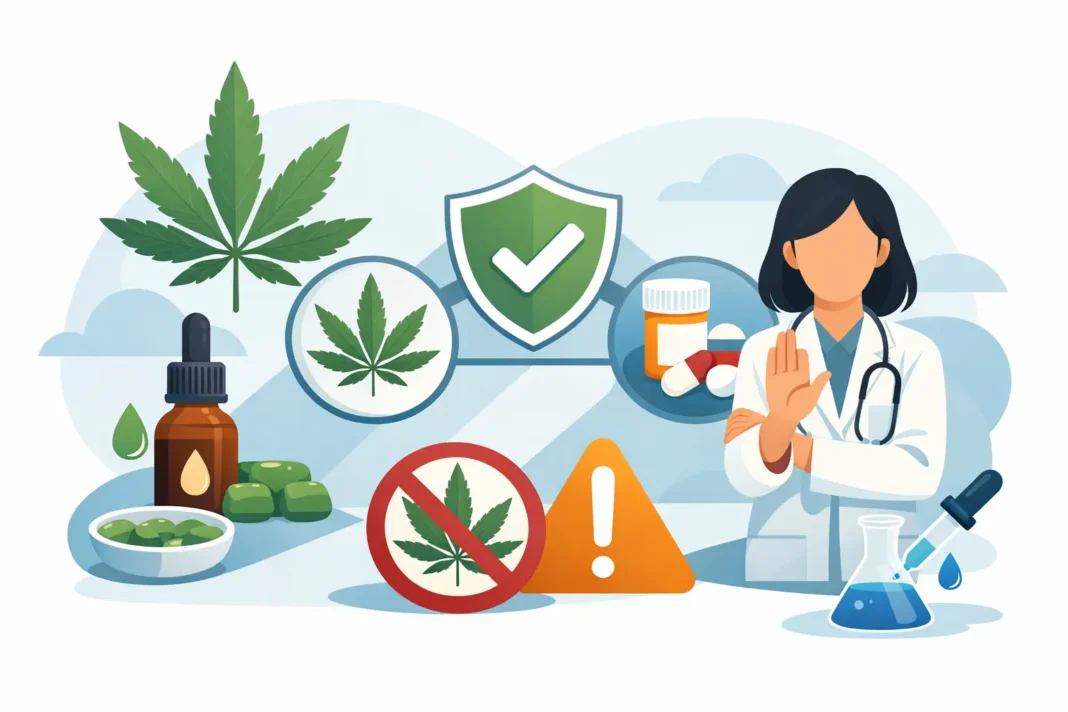

Patients may tolerate cannabis for months before experiencing unexpected sedation or bleeding, confusion, or changes in seizure control when another medicine is introduced. It is for this reason that efforts are being made to Avoid drug interactions with cannabis It is important to start the process before you take your first dose and not wait until a problem arises. The issue becomes more relevant for patients, cannabis businesses and prescribers as the medical cannabis market expands in Europe.
Cannabis does not have a single predictable effect. THC and CBD can be found in a wide range of products and batches. They also vary greatly by method of administration. They can also alter the way that conventional drugs are processed by the body, and their own sedating effects, cardiovascular effects, and cognitive impacts may be added to those of other medications.
It is difficult to predict cannabis interactions
The cytochrome P450 enzyme system is involved in many clinically important interactions. CBD can inhibit some of these enzymes such as CYP3A4 or CYP2C19. THC could also have an impact on drug metabolism. It can also increase the concentration of the drug in the bloodstream. Other times, a drug may change the amount of CBD or THC.
It is not always harmful. The result depends on several factors, including the dosage, the formulation, the frequency of use and other medications. A low-dose oil with a regulated dosage may have a different profile of risk than a THC flower product or a CBD supplement that is unregulated and has unknown contents.
Another way of interaction is by overlapping effects. Even if the blood concentrations are not affected, cannabis taken with alcohol, sleeping pills, opioids, or other sedatives may cause drowsiness and impairment of judgement. This is particularly relevant to older patients or anyone who may fall.
The medicines that need a pharmacist to talk about
Not all prescriptions have a known or significant interaction with cannabis. Some medicine groups do have narrow safety margins. A medication review is therefore essential before you start, stop or change a cannabis-based product.
Anticoagulants provide a good example. Patients on warfarin should be extra cautious, as changes in cannabis consumption, particularly CBD-rich products can affect anticoagulant control, and increase bleeding risks. The clinical team may have to adjust monitoring. Even if the evidence for specific products is not clear, direct oral anticoagulants are still worth discussing.
Anti-seizure drugs require equal attention. CBD interacts with clobazam in a known way and can cause a marked increase in its active metabolite. It can also interfere with liver monitoring when combined with Valproate. This should not be interpreted by patients as a reason for stopping prescribed epilepsy treatments. This is a good reason to have specialist oversight.
Other categories that need to be monitored include immunosuppressants like tacrolimus, or ciclosporin where altered levels may have serious consequences. They also include some antidepressants or antipsychotics as well as medicines for blood pressure and heart rhythm. Cannabis use for self-regulatory purposes should be disclosed by the patient to the cancer team and not kept separate.
Separate concerns apply to benzodiazepines and opioid pain medications, as well as sedating antihistamines, sleep aids, and sedating antibiotics. The risk is more likely to be from the additive sedation than an enzyme effect on the liver. Cannabis and alcohol can cause the same problems, making it more difficult to judge impairment.
Avoiding cannabis drug interactions in advance
A list of all medicines can be a useful tool in preventing drug abuse. The list should contain all prescribed medications, OTC products, CBD oil, herbal preparations, and recreational cannabis. It can be detrimental to the assessment if a product is not included because it was purchased online or only used on weekends.
Patients must inform their pharmacists or prescribers of the product type and, where available, its THC and CBD contents, as well as the dosage, route, frequency and dose. Cannabis is too general to be meaningfully reviewed. Oral CBD extracts, balanced THC:CBD oils and high-THC flowers inhaled can all create different interactions.
A single change is also sensible. It is harder to detect side effects if you start cannabis the same week that you begin a new antidepressant or pain medication. If a physician agrees that cannabis can be used, a low dose at first and gradual titration will help to determine the level of tolerance.
Stopping cannabis abruptly is not recommended if you regularly use it with medicines like warfarin or clobazam. Interaction risks can go both ways: Starting a cannabis product can raise the level of another medication, and stopping it can lower that level. Plans for monitoring must take into account both scenarios.
The safety of products is also a concern
Growing CBD consumption has blurred the lines between a labeled wellness product and medicine-like interventions. Yet, labeling can be inaccurate in markets that are not well regulated. A CBD-labelled bottle may contain less or more CBD, THC or contaminants than advertised. It is difficult for doctors to accurately assess dosage and interactions due to this uncertainty.
Patients should prefer products that are traceable, legal, and have batch information available. The possibility of an encounter is not eliminated, but the healthcare team has something to work with.
The UK and Europe have different rules for medical cannabis and cannabinoid non-prescription products. A product that is legal in one country may not be the same as it is in another. Businesses that operate in this sector should consider accurate labelling and reporting of adverse events, as well as providing clear information to consumers, as safety obligations for patients, not simply compliance tasks.
Do not ignore warning signs
Urgent medical attention is required for new or excessive drowsiness or confusion, dizziness or fainting, agitation or bruising, palpitations or worsening seizures, persistent vomiting, or unusual bleeding. A severe breathing problem, a loss of consciousness, signs that an allergic reaction is serious, chest pain, or significant bleeding are all emergency situations.
Even less dramatic changes are important. If a patient notices that they are more sedated or have balance problems after using CBD or if a medication which was previously effective now seems less effective, then it is important to contact the prescriber or pharmacist. If you keep a short record of your doses, timings and symptoms, it can be easier to identify whether cannabis may have been a factor.
You should not only rely on online interaction checkers
The digital checkers are useful for prompting a professional conversation, not a green light to combine products. They cannot take into account the exact formulation of cannabinoids, the quality or product, the liver function of he patient, or the reason each medicine was prescribed. These digital checkers can be a helpful tool for professional conversations, but they are not a greenlight to mix products.
This distinction is crucial in a marketplace where the consumer’s access to cannabis moves faster than clinical research. Cannabis interactions are becoming more researched, but the results remain uneven, especially when it comes to whole-plant products or low-dose CBD retail. Absence of documented interactions does not mean that there is no risk.
Anyone who uses cannabis along with regular medication should follow a simple standard: reveal use early, use a traceable and consistent product, avoid dose changes that are rapid, and consult a prescribing physician or pharmacist before adding or removing any cannabinoids. A small discussion can prevent a treatment option from becoming a safety issue.