




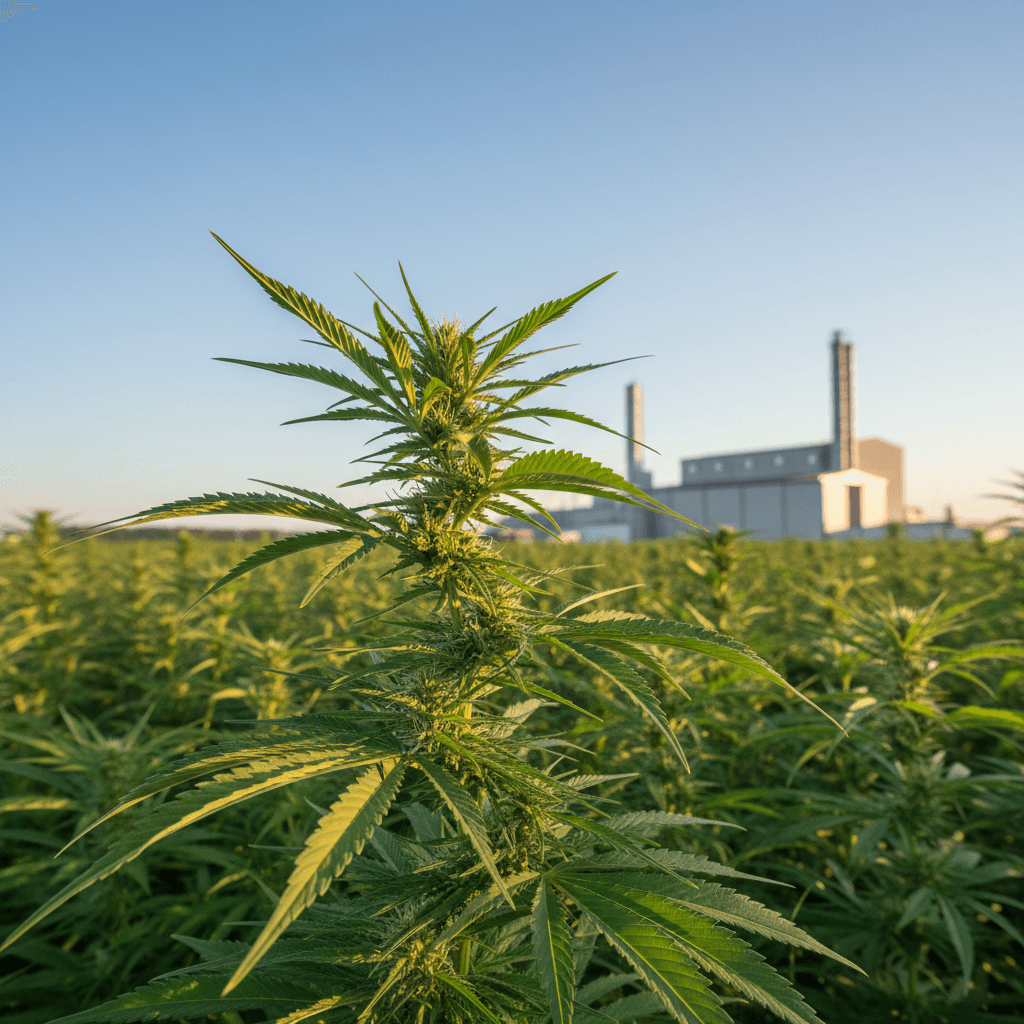

The Government of the Republic of Moldova approved new regulations that significantly expanded the allowed uses, and refined the supervision framework. industrial hemp. The announcement of this development on April 30th 2026 builds upon earlier approvals by regulatory agencies that had endorsed industrial hemp production in the nation, which was previously reported on Hemp Gazette.
The newly approved “Regulation on the procedure for authorizing, cultivating, monitoring, marketing and processing industrial/horticultural hemp” is designed to enhance the economic viability of the sector by allowing a broader range of raw materials to be utilised. The strategic expansion will increase the value per hectare up to 40%, providing resources to private investment and development.
Expanded Utilization of Industrial Hemp Raw Materials
In Moldova, the use of industrial hemp was previously restricted to fibers, seeds and oils. This scope has been significantly expanded by the updated regulations, which allow for additional plant products and components. Moldovan producers will benefit from this change as it opens up new markets.
- Stalks, Biomass: Now, the regulation explicitly permits hemp stalks as well as general biomass.
- Derived Products: Newly permitted uses include food supplements, cosmetics, industrial oil, briquettes as well as other permissible legal uses.
Moldovan officials reiterate the fact that industrial hemp can be classified as an agricultural plant and contains only trace amounts psychoactive substances. This prevents its usage as a narcotic.
Regulatory Framework and Compliance
The new regulations detail specific procedures regarding authorisation, cultivation and monitoring to ensure compliance and robust oversight. This process is governed by the National Food Safety Agency.
Authorisation and monitoring
ANSA is responsible for granting authorisations to those farmers who own or legally use land. Each authorization will contain comprehensive information such as:
- The applicant’s details
- Specific purpose for cultivation
- Area and location of land that is designated as hemp-growing.
- What variety of industrial hemp is to be planted?
- What are the intended uses of harvested products?
A production register must be maintained by producers and stored in compliance with the national laws. ANSA conducts both scheduled and unplanned checks to ensure compliance with all regulations. ANSA has the right to order corrections in the event of non-compliance or withdrawing the cultivation licence if needed.
THC Content Determination
The procedure used to determine the tetrahydrocannabinol content (THC), is a critical part of the regulatory structure. The analyses will take place during the plant’s flowering phase. For accuracy and impartiality, samples from the plants will be tested at accredited labs, even those that are located outside Moldova.
Market Access and Economic Impact
Production derived from industrial hemp cultivation may be sold on the Moldovan territory and also exported, provided that the required authorisations are in place. ANSA is required to receive annual data from producers. The structured approach of cultivation, processing and marketing should foster an industrial hemp industry in Moldova that is more valuable and dynamic, while attracting additional investment.
Disclaimer: The information contained in this article is not intended to be a substitute for medical advice. Hemp Gazette is not a medical provider and does not offer diagnoses or treatment plans. Consult a healthcare professional before you make any decision regarding your health. The Therapeutic Goods Administration in Australia (TGA) has not evaluated any statements regarding the therapeutic use of cannabis or hemp-derived products. TGA regulates the access to medical cannabis in Australia.
Sponsored Content
This informative article is brought to you by NUBO CBD →