







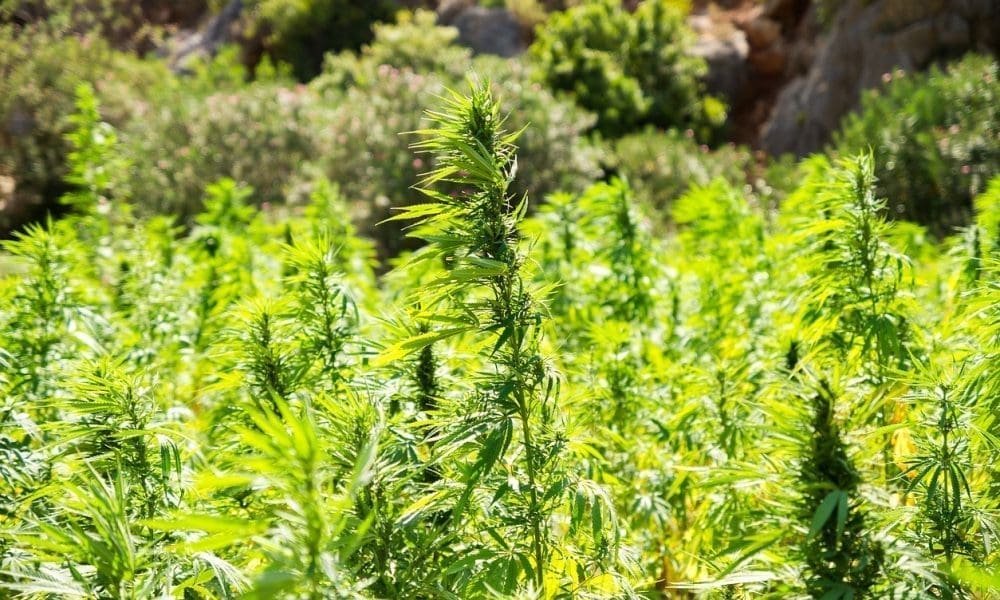

The Republican Senator says that he plans to sit down with House members to reach a “compromise” regarding hemp regulation, in view of his opposition against a proposed ban in Congress on products with “quantifiable amounts” of THC.
He said that part of the compromise is to respond to concerns that he and others stakeholders have regarding vague language, which leaves it to Secretary Robert F. Kennedy Jr. of U.S. Department of Health and Human Services to decide what amounts are “quantifiable”. The concern is that without specifics, all cannabinoid-containing products would be recriminalized.
Rand Paul, R-KY, who had prevented that the ban be incorporated in the Senate’s agriculture spending bill, passed last Thursday, said in an editorial published by The Courier Journal (on Thursday) that he was still discussing this issue with Sen. Mitch McConnell.
The debate has created tension between the Kentucky senators, with Paul pushing for regulations that he said would promote public safety while preserving the hemp industry that’s proliferated since the crop was federally legalized under the 2018 Farm Bill—a reform that McConnell played a key role in advancing.
McConnell, who has denied that his legislation would “completely ruin” the market as Paul, industry representatives, and others have claimed, agreed, after Paul raised a procedural objection, to remove the relevant language. Senate passed the bill last week.
Paul wrote in an op-ed that he was opposed to McConnell’s amendment because it would effectively set the legal THC limit in CBD products at zero. “The hemp sector has warned that banning an naturally occurring substance would destroy the industry. In part, this is because consumers buy products for their perceived health benefits.
“Further, the proposed reform is vague and would criminalize hemp products like CBD oil if they contain only a ‘quantifiable amount’ of THC, as determined by the Secretary of Health and Human Services,” he said. My concern is that the non-specific laws could be interpreted as zero THC. This would be not only nearly impossible to make, but may also result in no customers.
The hemp industry is concerned that reforms not carefully thought through could kill it.
McConnell denied this point both in a separate opinion piece and also on the Senate floor, when he castigated opponents of hemp prohibition, but without naming Paul.
Paul’s not denied that there are problems on the market for hemp, but he wrote in his article about how some distributors were “skirting legal limits” by increasing cannabinoids concentrations.
“As a consequence, some of these products are dangerous and, in some states, available to underage youths, prompting reform efforts,” he said, adding that both he and the industry at large are “open to reforms that prevent ‘juicing up’ hemp products, like hemp beverages, with purely synthetic cannabinoids of unknown origin that may cause reactions similar to marijuana.”
In 25 of these states, age and THC level limits have been established for the sale of such products. Paul added, “I have no objections with many of these changes.” The reforms should be implemented at state-level and keep the delta-9 THC content of the final product low.
He wrote, however, that regulations that limit THC in hemp products should not “set a target that is so low, it cannot be achieved physically” and that they “shouldn’t set targets that are so low, that the product’s intended effect loses, which most commonly to manage anxiety or pain.”
He added that “any reform in the legal treatment for hemp must make sure the industry thrives while also promoting the safety of consumers.”
The senator stated that he is “engaged in discussion with Senator McConnell, other interested members and have plans to meet members of the House of Representatives to find a solution in the future.”
The discussions we are having now give us an opportunity to introduce some commonsense into the regulation of hemp. Current regulations state that if one hemp plant is found to exceed the delta-9 limit of.3 percent, the whole field must be turned under, and the crop for the year will not grow. The focus of regulations should be on the finished hemp products and not the hemp plants or the farmers who grow them. Reforms should recognize that hemp used for industrial purposes, such as hemp wood, shouldn’t require any testing, which will result in less waste from hemp farmers.”
Paul said that it is better to have clear, reasonable and enforceable statutory rules that guarantee the viability of Kentucky’s hemp industry as well as the safety and quality of its products than to use the law in order to destroy the market upon which Kentucky business owners, farmers and consumers rely. Paul said that if all the parties are acting in good faith then a compromise could be found to allow hemp to continue growing while still providing products safe for the consumers.
Andy Harris (R, MD), a cannabis prohibitionist and noted member of the House Appropriations Committee, had led the House Appropriations Committee’s efforts to remove the hemp-related language from the Senate Spending Bill.
Meanwhile, Paul recently filed a standalone bill that would go in the opposite direction of the hemp ban, proposing to triple the concentration of THC that the crop could legally contain, while addressing multiple other concerns the industry has expressed about federal regulations.
In June, the senator presented the Hemp Economic Mobilization Plan Act (HEMP). It mirrors versions he’s sponsored over the last several sessions.
Harris, for his part, told MEDCAN24 that he wasn’t concerned about any potential opposition to the hemp ban in the Senate—and he also disputed reports about the scope of what his legislation would do to the industry.
The Congressional Research Service (CRS) released a report in June stating that the legislation would “effectively” prohibit hemp-derived cannabinoid products. It was originally said that this ban would prohibit the sale of CBD products as well. However, the CRS updated its report to eliminate that wording for unclear reasons.
The hemp language is largely consistent with appropriations and agriculture legislation that was introduced, but not ultimately enacted, under the last Congress.
Hemp stakeholders protested this proposal. An earlier version was included last year in the base legislation from the subcommittee. It’s virtually identical to a provision of the 2024 Farm Bill that was attached by a separate committee last May via an amendment from Rep. Mary Miller (R-IL), which was also not enacted into law.
A leading alcohol industry association, meanwhile, has called on Congress to dial back language in the House spending bill that would ban most consumable hemp products, instead proposing to maintain the legalization of naturally derived cannabinoids from the crop and only prohibit synthetic items.
Wine & Spirits Wholesalers of America (WSWA) President and CEO Francis Creighton said in a press release that “proponents and opponents alike have agreed that this language amounts to a ban.”
Separately, key GOP congressional lawmakers—including one member who supports marijuana legalization—don’t seem especially concerned about provisions in the bill despite concern from stakeholders that it would put much of the hemp industry in jeopardy by banning most consumable products derived from the plant.
—
MEDCAN24 has been tracking the hundreds of bills relating to cannabis, psychedelics or drug policies that have passed through state legislatures as well as Congress in this past year. Patreon subscribers who donate at least $25 per month get full access to the interactive maps and charts as well as our hearing calendar.
Find out more about our marijuana law tracker. To get access, become a Patreon supporter.
—
Jonathan Miller, general counsel at the U.S. Hemp Roundtable, told congressional lawmakers in April that the market is “begging” for federal regulations around cannabis products.
Rep. James Comer, R-KY, also asked about FDA’s inaction on regulations. He sarcastically asked if “a gazillion of bureaucrats who work at home” would be required to regulate CBD and other cannabinoids.
A report from Bloomberg Intelligence (BI) last year called cannabis a “significant threat” to the alcohol industry, citing survey data that suggests more people are using cannabis as a substitute for alcoholic beverages such a beer and wine.
Last November, meanwhile, a beer industry trade group put out a statement of guiding principles to address what it called “the proliferation of largely unregulated intoxicating hemp and cannabis products,” warning of risks to consumers and communities resulting from THC consumption.
Pixabay.com is the photographer.
MEDCAN24 could not exist without readers’ support. Consider a Patreon subscription if our marijuana advocacy journalism is what you use to keep informed.

Sponsored Content
This informative article is brought to you by NUBO CBD →