







We want regulation to protect consumers, and to weed out the bad actors. But we do not want this to be regulated to death.
Justin Ward and Anna Ward, of Stoney Branch Farms in Rushville, Illinois were eagerly anticipating action this spring on legislation regulating intoxicating hemp-based products. This would have decided the future of Stoney Branch Farms’ family run hemp business. It never happened.
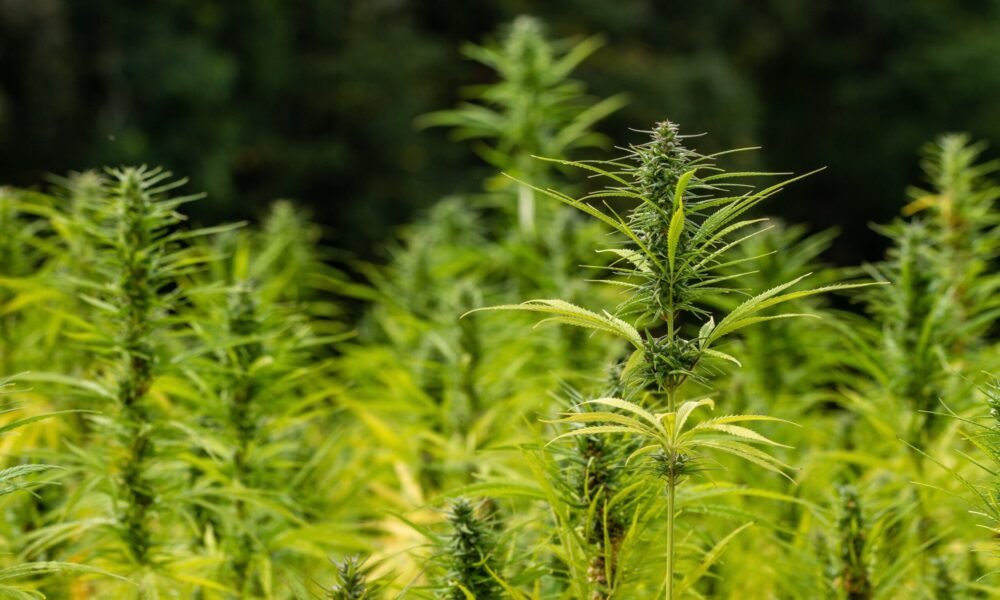
Illinois has legalized and regulated hemp farming since 2018. This was after the federal government legalized hemp cultivation. In the legislation, it was expected that the hemp plant would once again be used for industrial purposes, as well as to create CBD oils, which are extracted and marketed with therapeutic but non-intoxicating properties.
The use of hemp to produce synthetic products containing intoxicating chemicals that are unregulated by federal law has sparked heated debates across Illinois, and many other states. The products, called delta-8 THC by some, are legal due to what is described as a ‘loophole’ in the Farm Bill 2018 that allowed hemp production.
Gov. JB Pritzker, a Democrat from Illinois, has voiced his opposition to intoxicating hemp. He says it undermines the legal cannabis industry in the state and places children and teenagers in danger. He’s advocated—thus far to no avail—for regulating intoxicating hemp products similarly to the state’s legalized cannabis industry.
“This regulatory gray area has created a loophole that put Illinois consumers of all ages, but particularly children, in danger while an underground market flourished—the exact opposite of what Illinois has done by regulating our cannabis industry,” Pritzker said in a December 2024 news release.
The industry is in the limbo stage until the state or federal governments act first. This was the third year in a row that a regulation bill had failed. It is the latest front of a legal battle that pits the cannabis-legalized industry and industrial hemp farmers.
Hemp and cannabis: what’s the Difference?
Hemp and cannabis are both plants that contain THC. This can produce a psychoactive effect when consumed. THC is the main difference between hemp and cannabis. Hemp has much less naturally occurring THC than cannabis.
Federal law defines hemp as any plant with a dry weight concentration of less than or equal to 0.3 percent. It is cannabis if it contains more than 0.3 per cent THC.
The federal Controlled Substances Act from 1970 classified both substances as Schedule I, until the Farm Bill of 2018, which removed hemp and cannabis from the definition, creating a legal market for hemp.
The Farm Bill set a limit for delta-9-THC, which is the main cannabinoid in cannabis. The Farm Bill does not set a threshold for delta-8 derived from hemp, which is produced through chemical processing done after the hemp harvest.
It is not regulated or supervised at state and federal levels to ensure that the products produced and sold are of high quality.
Hemp products are available to young people at a much lower price than cannabis.
In a recent report from the University of Illinois System Institute of Government and Public Affairs, released in May this year, credible evidence was found that products derived from hemp and containing THC are being marketed and made available online and at convenience stores to teenagers and young adults.
In response, at least 32 states passed legislation increasing regulations or, in California’s instance, banning intoxicating cannabis hemp completely.
Should the ban or regulation be enforced?
Since hemp was legalized, the Wards are growing it on their farm. It’s a group of people who want to see more regulation on the hemp industry, not a ban.
Justin Ward is the president of Illinois Healthy Alternatives Association. This trade association, which represents hemp farmers and acts as a lobbying group, has regularly made trips to Springfield, Illinois to push for more hemp regulations.
Ward believes that the new regulation should require state mandated testing, to verify hemp products meet federal standards and are not contaminated with toxic substances. He also recommends using packaging and labels designed for children, as well as requiring a minimum purchase age at point of sale.
Ward: “Everything meets this standard”. The Wards at Stoney Branch Farms offer both intoxicating and non-intoxicating hemp products, such as delta-8. According to them, the Wards do all of their own cultivation, processing and packaging.
Stoney Branch conducts pre-harvest THC testing by a federal sample agent. A third-party also performs post-processing tests to verify that the finished products are not contaminated. Products are packaged in child-safe containers and sold online to customers 21 or older.
House Bill 1 was introduced in Illinois this year, with hemp lobbyists’ support. However, disagreements among stakeholders about licensing, taxes, and the legal threshold for delta-8 THC led to the bill stalling without being put to vote.
Many municipalities have banned the sale of products derived from hemp. In Chicago, for example, the City Council approved specific bans in certain wards.
The cannabis-legalized industry of the state has at times demanded an outright prohibition on delta-8. Its first sales began in January 2019. The cannabis industry insists that it is willing to find a solution.
Tiffany Chappell Ingram is the executive director of Cannabis Business Association of Illinois. She said that in a statement released recently, regulations were needed to “rein” intoxicating cannabis. She claims that hemp undercuts the licensed cannabis industry, avoids health and safety rules and does not generate much revenue for state-funded programs because of its low tax rates.
We’ve worked on this issue for many years, and we have a number of allies who are very supportive in the legislative branch. Ward. This hasn’t yet been banned because they listened to us.
The cannabis crowd is a threat
Cannabis industry in the state argues that hemp-infused alcohol is too similar to cannabis for it to be given its own category of license and to face fewer restrictions on entry and operation.
While a hemp three-year licence costs just $1,100 (including initial licensing fees), a cannabis license will cost you $100,000 for the application, and then $100,000 more each time that license is renewed. The state limits adult-use large cultivation centers to only 21 licenses. Less than 100 small-scale, “craft-grow” licenses costing $40,000 each have been issued.
After hemp became legalized, those who were unable to enter the cannabis market saw it as a chance to make a similar product but without all of the red tape.
Ward explained that the hemp industry has lower entry barriers than the cannabis sector.
Hemp, too, is taxed much less than cannabis. The industry can therefore price their products with greater competitiveness. According to a University of Illinois study, cannabis revenues are negatively affected by higher taxes and stricter regulatory compliance.
Cannabis licenses for social equity are offered at lower prices to people who were affected by prior cannabis criminalization in the state, such as those who had been previously convicted. However, the cannabis industry remains far from being accessible.
Ford, who is the leader of cannabis and hemp regulation every year, believes it’s crucial to strike a balance between promises to social equity license holders, as well as concessions to hemp.
Ward has said that he is in favor of easing cannabis regulation to allow the Illinois industry greater access, but also wants hemp regulations “sensible”.
Ward explained that while he wanted regulations in place to protect consumers, weeding out the bad actors and to prevent the proliferation of “stuff”, he didn’t wish to regulate this industry until it was regulated to death.
The legislature divided over regulation
It has not yet been decided whether the state will regulate products made from hemp containing delta-8-THC as separate substances or treat them the same as recreational and medical cannabis.
This issue has caused divisions among House Democrats in the past year. Despite continued discussion during spring session, legislators have not reached a consensus.
Pritzker’s House Bill 4293 in 2024, which would define hemp as marijuana, made it illegal for hemp to be sold without a cannabis licence. The hemp lobby opposed this measure as they were afraid it would exclude them and give holders of cannabis licenses a monopoly in the cannabinoid industry.
Pritzker blamed House Speaker Chris Welch’s (D) failure to pass the bill back in January. Welch stated that the bill was not able to be passed despite the bipartisan backing. Welch, according to a spokesperson at the time, promised that he’d continue working on hemp regulations throughout the legislative sessions.
The speaker’s spokesperson declined to provide any comment as to why hemp regulation has not progressed. Over the past few years, hemp and cannabis lobbyists donated thousands to Welch and Ford campaigns.
Ward stated that Ford is one of the biggest supporters for hemp. Ford met with legislators, representatives of the Governor’s office, and hemp industry participants throughout the session in order to reach a consensus.
Ford stated, “We already have businesses that are in the market, but they don’t want to lose them.”
Although discussions on hemp regulation have been held behind closed doors, a hearing has not yet taken place. Rep. Sonya (D) Harper, who chairs the House Agriculture committee in Chicago, claimed that she had requested a public hemp hearing but the speaker hadn’t responded.
Harper: “I’m just trying to ensure that those who have been most affected are heard.”
Future hemp legislation is likely
Ford has said that, although Pritzker and certain advocacy groups have put pressure on the state to regulate hemp, he doesn’t want to hurry up this process. He believes it will require a bipartisan approach.
Ford stated, “We were rushed in the way we handled cannabis regulation and there weren’t enough stakeholders present at the time.” Some Republicans say they weren’t involved.
Recent negotiations have brought together a few Republicans to discuss hemp laws. Yet a compromise seems still far from being reached. Rep. C.D. Davidsmeyer, R-Murrayville (who has been leading this effort), said Republicans will not support anything other than closing the loophole for intoxicating hemp.
Davidsmeyer stated that he is against the dual standard of cannabis and hemp license holders.
He said that if you want to set a standard for your industry, everyone in it should follow the same set of rules.
Un spokesperson for the Governor’s Office said his views have not changed, since he was calling for increased regulation.
Ford stated, “I believe that everyone is in agreement that this should be regulated, including the Speaker of the House and me, as well as the Republican Party, myself and industry.” Over the next few months, I think we’ll be able get some results. This is a top priority.
Federal changes coming?
The U.S. Senate Appropriations Committee passed a bill on July 10 that will close this loophole in federal law. The bill, if it becomes law, would prohibit the sale and cultivation of hemp products that contain “quantifiable quantities” of THC, reversing the previous allowance.
The hemp industry in the United States, which is worth more than 400 million dollars, would be dealt a severe blow.
The most common form of hemp that is sold in the U.S., is CBD. This non-intoxicating, cannabinoid is being marketed for its therapeutic benefits, such as treating insomnia, inflammation or seizure disorders.
Ward explained that the business is still focused on people looking to benefit from some of cannabis’ therapeutic properties without being high.
CBD has traces of THC in almost all products. Therefore, any proposal to prohibit “quantifiable amounts” of THC may result in CBD being banned. Ward said that by doing so, “we are really dissapointing a large number of Illinois consumers.”
Simon Carr, a journalism student at Northwestern University’s Medill School of Journalism, Media, Integrated Marketing Communications, is a fellow with its Medill Illinois News bureau, working with Capitol News Illinois.
Isabella Schoonover, a journalism graduate student at Northwestern University’s Medill School of Journalism, Media, Integrated Marketing Communications, is a fellow with its Medill Illinois News Bureau, working with Capitol News Illinois.
Capitol News Illinois This nonprofit service distributes information about state governments to thousands of media outlets across the state. This service is funded by the Illinois Press Foundation as well as the Robert R. McCormick Foundation.
This article first appeared on Capitol News Illinois and is republished here under a Creative Commons Attribution-NoDerivatives 4.0 International License.
MEDCAN24 would not be possible without the support of readers. Consider pledging a monthly Patreon if our marijuana advocacy journalism is what you use to keep informed.

Sponsored Content
This informative article is brought to you by NUBO CBD →