




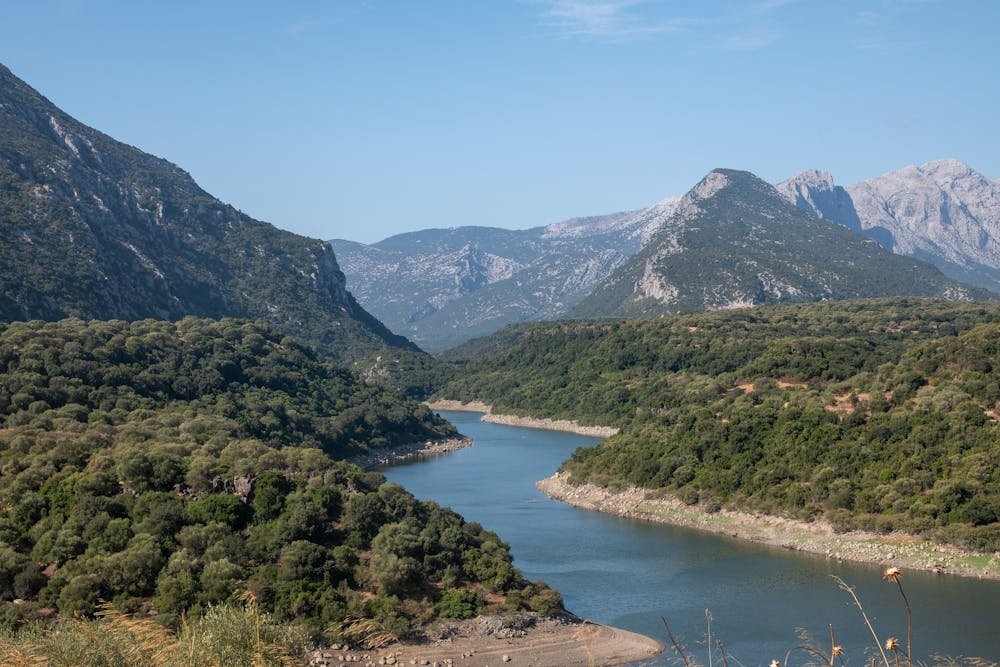

A record-breaking haul of more than 100,000 cannabis plants seized in 2024 on the island of Sardinia suggests that Italy’s intensified crackdown on illicit drugs is spilling over into the industrial hemp sector—with local farmers saying their legitimate hemp crops are under threat.
According to the latest report by the Central Directorate for Anti-Drug Services of the Ministry of the Interior, in Sardinia, 100,336 plants of cannabis were confiscated in 2024. This is an increase of 32.6% from 72,698 in 2023. According to a report, two-thirds all plants seized in Italy are located on Sardinia.
Several sources from the agricultural and industry sectors believe that at least a portion of this quantity may be industrial hemp crops misclassified as narcotics. In Sassari for instance, the operators claimed police cleared the farm and subsequently labelled the crop as “planted plantations for narcotics purposes.”
Hemp is technically legal in Italy, but marijuana isn’t.
A simple question
Guardia di Finanza in Italy, the financial police said that it destroyed 276 kilograms of dried marijuana flowers as well as 2,000 additional plants during the raid at Sassari.
The Sardinia Cannabis Association criticized the agency: “Just a few months earlier, the Carabinieri (police) in the Ozieri commune of Sassari and the NIPAF (the environmental/agri-food investigative unit) had already inspected that same company, performing rapid tests that confirmed the cultivation was fully legal,” the group said in a statement. “Now the question is simple: How is it possible that for one law enforcement agency it is industrial hemp and for another, after seven days, it suddenly becomes a ‘narcotic?'”
Crackdown on National Drugs
Giorgia Meloni’s government made anti-drug terrorism and law and order a priority. Italy presided over the G7 in September 2024 and adopted a statement strengthening the cooperation against threats posed by synthetic drugs. Meloni, who has publicly backed stronger penalties and increased police powers to combat organized drug trafficking, was the Italian Prime Minister at the time.
The Interior ministry’s report details broader drug-trafficking trends in Sardinia: cocaine seizures rose from 114 kg in 2023 to 169.35 kg in 2024; hashish seizures jumped from 240.64 kg to 383.53 kg; synthetic-drug powder seizures escalated from 5 kg to 417 kg—a rise of 8,240%. Cagliari was responsible for 72% of Italy’s interceptions of maritime hashish.
Meloni’s War on CBD
Meloni is not only waging war on the hard drugs but also hemp flowers and extracts of hemp-flowers. Italy’s Law 242/16 allows for the use of industrial hemp. But a recent government order that bans hemp flowers, hemp-flower extracts and other hemp products has created uncertainty among farmers.
The Meloni Government has been aggressively reclassifying hemp extracts and flowers such as CBD and CBG as drugs since 2024 despite the European Court of Justice ruling that these substances were legal.
Under the Italian government’s emergency decree, the cultivation, sale, processing, transport and possession of hemp flowers—even from certified low-THC hemp varieties—are effectively banned nationwide. The hemp industry has warned that the emergency decree threatens tens and thousands of jobs as well as thousands of businesses in Italy.
Sardinia Hemp vision
Sardinia has for several years sought to establish a structured industrial hemp industry—both for fiber and grain production, as well as for land reclamation and phytoremediation projects. The regional council adopted a hemp processing and sowing law in 2022, highlighting the growth potential of the industry.
Sardinia offers a good indicator for supply-chain companies and investors who track the Italian hemp market. The region has a good climate, plenty of land, and regional hemp laws that support the processing.
Now that law enforcement is ramping up, some farmers are concerned about the possibility of hemp being misclassified as cannabis. That creates practical problems: planted acreage may shrink, seed‐to‐sale monitoring becomes more burdensome, insurance and financing become riskier, and processors may hesitate to contract with farms until legal clarity returns.
Sponsored Content
This informative article is brought to you by NUBO CBD →