




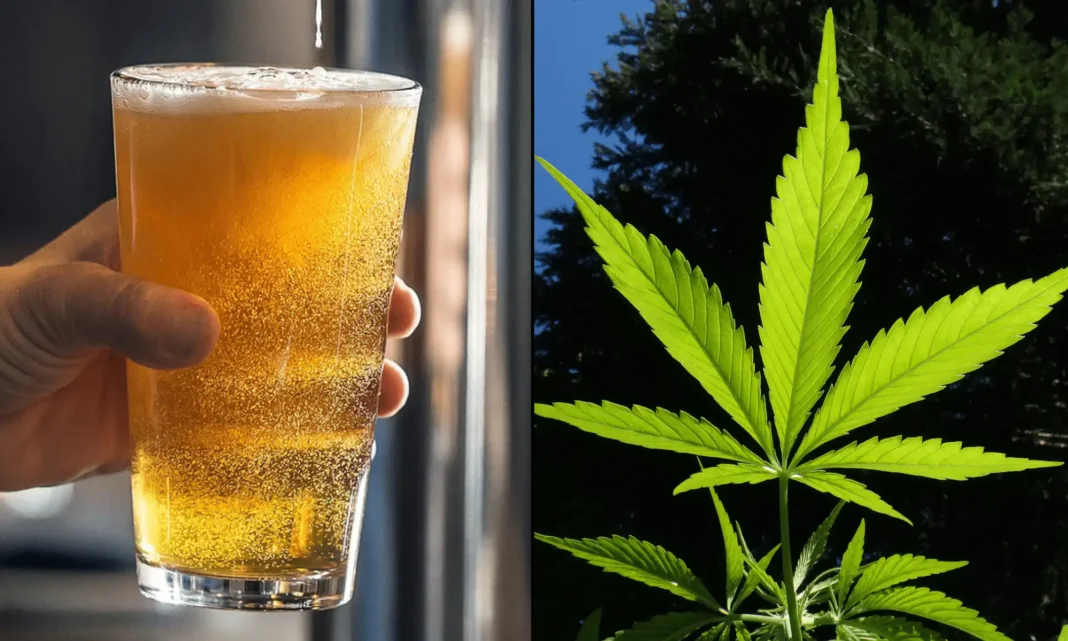

A new survey shows that more than three out of four people who consume THC-infused cannabis beverages drink less alcohol—with more than a fifth saying they have quit alcohol entirely.
Crescent Canna, a THC beverage manufacturer, conducted the poll published Tuesday. It surveyed their customers to find out how they use THC beverages.
37 percent of those who tried the product said that they have reduced their alcohol consumption, while 19 percent say that they are drinking slightly less, and 21 percent claim to no longer drink alcohol.
THC-infused beverages are part of the wellness regimen for 44%.
In response to a more detailed question, 80 per cent of respondents said that cannabis drinks helped them relax.
THC drinks help more than half of respondents (51%) avoid alcohol’s negative effects, while 60 percent say there is no after-effect.
The Via Crescent Canna.
A third (35%) of THC beverage consumers said that they use other cannabis products much less due to their availability. A further 15 percent of respondents said that they only consume cannabis drinks.
The majority of consumers are aware that the federal government will be recriminalizing hemp-derived THC in products from November. 87 percent of respondents said they were familiar with the ban.
27 percent of respondents said that they were actively buying THC beverages or purchasing them more frequently in anticipation of the federal crackdown. Another 41 percent stated they planned to do so as November nears.
If the THC ban is implemented as planned, 67 per cent of THC drinkers said that they would switch to another form of cannabis. 23 per cent would increase their alcohol consumption. Just 8 per cent say they’d stop using THC completely.
63 percent of customers say that they buy cannabis beverages online. Another 26 percent purchase them in grocery, liquor or convenience stores. THC beverages are available at 5 percent of marijuana dispensaries, and at another 5 percent of bars, restaurants, or events venues.
A total of 1,637 adults aged over 21 years who had tried THC at least one time were interviewed between May 29th and June 11th.
An earlier poll conducted by Crescent Canna last year similarly showed that nearly four in five adults who drink cannabis-infused beverages say they’ve reduced their alcohol intake—and more than a fifth have quit drinking alcohol altogether.
NuggMD’s cannabis telehealth platform conducted another survey that found marijuana users are much more likely than alcohol drinkers to choose restaurants offering cannabis-derived THC beverages as an option to alcohol.
A previous NuggMD poll found that cannabis consumers are more likely to shop at Target following the major retailer’s decision to start selling hemp-derived THC drinks,
In the midst of increasing pressure from the White House on Congress, lawmakers in both parties filed various legislations to alter, delay or reverse the federally imposed recriminalization for hemp THC and other products.
Hemp products with delta-9 THC levels less than 0.3% on a weight basis, were made legal by President Donald Trump during his first year in office. Late last year he passed new legislation that contains provisions which will redefine hemp in order to ensure only products containing 0.4 milligrams total THC will be legal on November 12.
In a letter to House Speaker Mike Johnson (R-LA) last month, White House Office of Management and Budget (OMB) Director Russell Vought said the administration wants lawmakers to “ensure the fair treatment of hemp products”—specifically citing legislation that would keep many hemp products legal that are currently set to be recriminalized this year, add labeling requirements and institute new taxes on sales, among other regulatory reforms.
The administration “welcomes the opportunity to work with the Congress to, at a minimum, update the statutory definition of final hemp-derived cannabinoid products to allow Americans to benefit from access to appropriate full-spectrum CBD products,” OMB separately said last month, “while preserving the Congress’s intent to restrict the sale of products that pose serious health risks.”
A statement of the administration’s policy on an annual agricultural spending bill, which passed through the House of Representatives included a request to avoid a wide prohibition of CBD hemp products.
Several lawmakers had filed amendments to that legislation to keep hemp products legal, but each was either blocked by the House Rules Committee from advancing to a floor vote or withdrawn by its sponsor.
OMB’s statement on administration policy stated: “The Administration will support the passage of this legislation but is eager to address any concerns it may have prior to its enactment.” The Administration is looking forward to working closely with Congress as this bill moves through the legislative process.
In April, the president himself urged congressional lawmakers to again redefine hemp to avoid recriminalization of full-spectrum CBD products.
Trump stated in an Truth Social posting on the day that his administration rescheduled marijuana.
He said, “We need to get this right and fast for all those people who have seen how CBD has helped them.” It will benefit our FARMERS as well, which we will never forget.
Advocates for the industry say the new law, which was passed in 2013, not only threatens the prohibition of synthetic and intoxicating cannabinoid-based products but could also force the removal from the marketplace popular CBD products with full spectrum that are used therapeutically by many Americans.
The president wrote in a post on social media that one in five adults had used hemp-derived CBD. Many people said it helped them with chronic pain.
He also referenced a new initiative the administration launched in April to cover up to $500 worth of hemp-derived products each year for eligible Medicare patients. The program being implemented by the Centers for Medicare & Medicaid Services (CMS) focuses largely on CBD but also allows products to have up to 3 milligrams of total THC per serving.
Trump explained that he signed the Executive Order in December which called for Research and Innovation on CBD derived from hemp. “Our Dr. Mehmet acted quickly in order to comply with the Executive Order. He launched an example for seniors earlier this year. There is still more to do!
Please get it done and as SOON as you can,” said the President in response to the congressional fix to broaden the criminalization that will take place in November. Thanks for taking this seriously!
Trump is not sure how much he will reduce federal restrictions for hemp and the types of THC limits and rules he’d like to see signed into law.
As MEDCAN24 reported last month, a Republican congresswoman is circulating draft legislation that would keep hemp THC beverages legal under federal law, creating a carve-out from the broad recriminalization of products derived from the crop that is set to take effect later this year.
Beth Van Duyne’s (R-TX) Hemp-Derived Beverage Regulatory Clarity Act would, in its present form allow adults older than 21 to consume THC-hemp drinks that contain up to 5 mg of delta-9 THC. It would also impose a federal tax of 10 cents per milligram of any hemp-derived cannabinoid contained within such beverages.
The National Restaurant Association, which represents the industry, recently sent a letter urging congressional leaders to delay the federal recriminalization of hemp THC beverages that is scheduled to take effect later this year and replace it with a regulatory framework that “ensures consumer safety while meeting growing market demand” for the products as an alternative to alcohol.
A U.S. Department of Agriculture report published in April shows that farmers in the U.S. grew three-quarters of a billion dollars worth of hemp crops in 2025—a 64 percent increase from the prior year.
MEDCAN24 would not be possible without the support of readers. Please consider making a Patreon monthly pledge if you depend on our cannabis journalism for information.
