







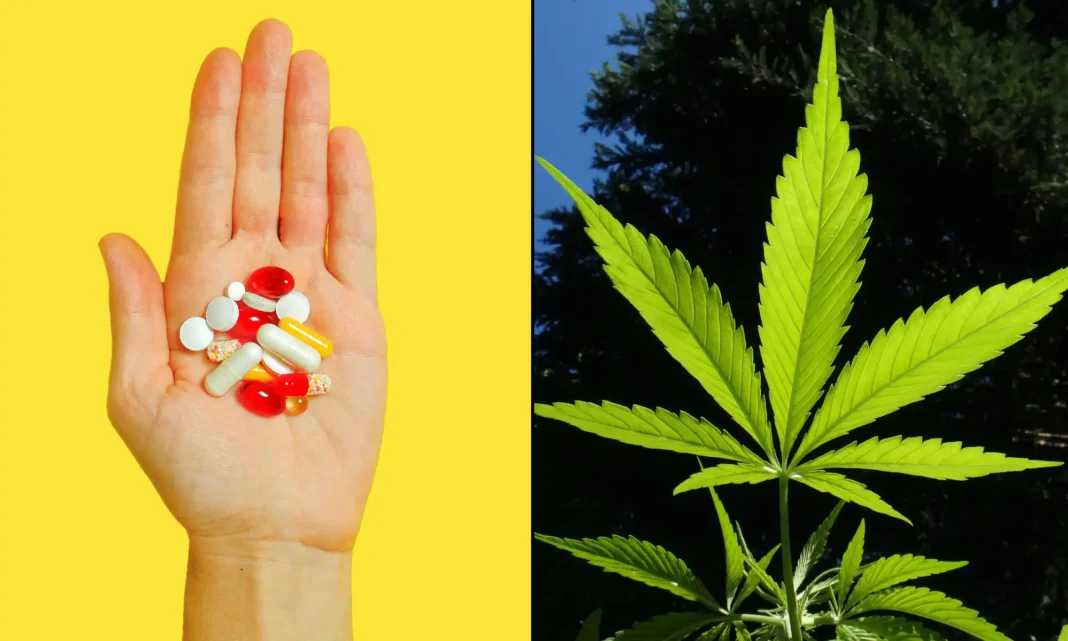

A new study shows that patients can reduce the use of prescription painkillers by making medical marijuana affordable and available.
“Although cannabis has historically been characterized as a potential ‘gateway drug,’ it may also serve as a harm-reduction tool for some patients seeking to reduce reliance on higher-risk opioid medications,” the researchers from University of Pennsylvania’s Perelman School of Medicine found.
This study was a prospective, observational test conducted by the Hospital of the University of Pennsylvania. It followed 29 adults for five months. All had been living with chronic pain for years—a median of 11 years—and all were already taking opioid medications but had struggled to taper them despite other treatments.
This investigation was unique in that it focused on the cost of medical marijuana. The researchers describe their work as, “the first prospective study to evaluate medical cannabis as an opioid alternative in a situation where cost had been removed as a significant barrier.”
Participants from an outpatient pain clinic at the university were recruited and monthly pain assessments with the Numeric Rating Scale of Pain (NRS) performed. Researchers assessed daily opioid usage, expressed in milligrams equivalents of morphine (MMEs).
Seven patients (24%) had been able to discontinue their opioid therapy completely by the study’s end, and five achieved it by the second week. The authors also noted that pain levels decreased with time.
In the Cureus Journal of Medical Science article, it is noted that “a statistically significantly reduced mean pain score was sustained throughout the five-month period of study.”
The average opioid consumption was reduced by approximately 32 MMEs a day. This reduction was sustained through the entire follow-up. Seven patients also were able stop their opioid treatment completely.
The researchers noted, “Mean Daily Opioid Consumption decreased from a base of 46.8mg/day to 16,2mg/day within a month. It remained at low levels throughout the entire five-month period.”
This study is unique because it was the first to introduce medical marijuana and remove the financial barrier. According to the report, participants had “consistently identified the cost barrier as the major obstacle to initiating medical marijuana” before enrollment.
They added that, in addition to highlighting the novel nature of the study they also hypothesized “that improving access to medical marijuana will allow a subset, especially those patients for whom costs are a significant barrier, to decrease or stop opioid use, while still maintaining adequate pain management.”
These results indicate that medical marijuana may be an adjunct therapy to reduce opioid usage, relieve chronic pain and improve health-related life quality,” the researchers concluded.
This study is a valuable addition to the literature on cannabis’s safety and therapeutic potential.
Authors of the study caution about their limitations, and urge further research. It was not a controlled study. The authors state that the sample size is small. The findings were not standardized because the “patients used medical cannabis in a self-titrated manner, which led to variability in dosage and frequency.”
The authors did conclude that, “Medical cannabis can be an adjunctive treatment strategy to reduce opioid usage among long-term opioid therapy patients when used appropriately under medical supervision.”
The research follows a study that showed using medical marijuana may help reduce other medication use, such as opioids, sleep aids, and antidepressants. The study, which involved more than 3500 patients, also found that they experienced fewer side effects when switching from prescription medications to cannabis.
This comes just after Donald Trump claimed that marijuana could “make people much better”, and be a “substitute” for opioids, which are addictive and can lead to death.
Last month, the Trump administration announced it is moving ahead with the federal reclassification of marijuana by moving medical cannabis from Schedule I to Schedule III of the Controlled Substances Act.
Sponsored Content
This informative article is brought to you by NUBO CBD →