







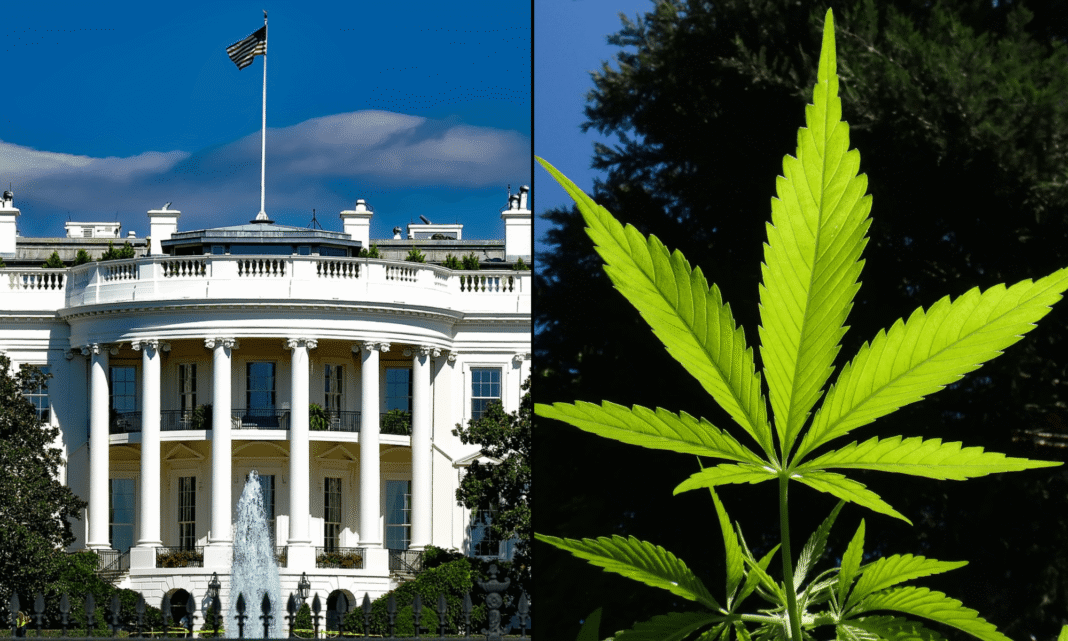

A White House official says that, as President Donald Trump weighs whether to follow through with a marijuana rescheduling proposal that was initiated during the Biden administration, there’s a growing understanding that cannabis reform is “good politics”—comparing the issue to how same-sex marriage gradually gained bipartisan support over time.
In interviews with The Free Press that were published on Wednesday, a White House official, a congressional lawmaker, MAGA influencers in Trump’s orbit, industry sources and others shared their perspective on the administration’s current thinking on marijuana—with some sources indicating that a decision could come by the end of 2025 or even as soon as this month.
The unnamed senior White House staffer said Trump sees how cannabis reform could benefit Republicans ahead of the 2026 midterm elections—even if others like Stephen Miller, deputy chief of staff for policy, remain opposed to loosening marijuana laws. Miller will be in charge of overseeing cannabis policy changes, although he may not be “super thrilled”.
Official: “For many people in the base this is a subject like homosexual marriage, which they are used to.” “It is good politics.”
But even Miller—who served in the office of former Sen. Jeff Sessions (R-AL), a staunch prohibitionist who rescinded Obama era guidance on cannabis when he became attorney general during Trump’s first term—still “recognizes the politics” favor marijuana reform, the official said.
The Free Press reported that a GOP lobbyist, who does work on marijuana policy issues but did not identify himself, said: “Stephen has an excellent grasp of the polling data and knows where American citizens are.”
A source in the marijuana industry, who declined to be named, said “the president had been informed on the subject and he began to follow along.”
“It was primarily because there were seniors in his orbit that he was seeing on the golf course who were telling him, ‘This stuff is actually helping me, I can grip my club better, walk 18 holes, and I’m sleeping better and don’t have anxiety,'” they said.
The timeline of a potential rescheduling is unclear. Trump stated in late August that the decision to reschedule would take place within a couple of weeks. But, it hasn’t happened, even though more than 2 months have passed. According to The Free Press “people familiar with the issue” said that action could be taken as soon as this month and most likely before the end of the year.
The unnamed White House source said that “all policy and legal requirements and implications are being considered.” While the press office refused to comment and referred to President Obama’s comments from August, it did not make an official statement.
The Free Press quoted Trump advisor Alex Bruesewitz as saying that the move of marijuana from Schedule I into Schedule III under the Controlled Substances Act would “maintain cannabis as a drug but allow for greater testing to be done for medical purposes.”
Rescheduling is a “politically savvy move, said Bruesewitz, whose political consulting firm X Strategies received a $300,000 payment for “media” services from a marijuana industry political committee called the American Rights and Reform PAC.
Bruesewitz said that despite his repeated posts on social media about the benefits of rescheduling, he would “back him 100%” and it was “up to the President”.
Many veterans I have spoken to also value cannabis’ medical benefits, he added.
Rep. Pete Sessions, R-TX said “anyone in the administration who encourages the president to make this decision is making a big mistake,” when referring to the rescheduling. “We’ll end up appearing like a losers country.”
Jason Miller, former Trump senior advisor, said, “Marijuana smells disgusting.” Garrett Ventry, a GOP political consultant and operative, said that cannabis “makes lazy people.”
John Catsimatidis, a Republican millionaire and close friend of the President, stated that ““Expansion of drugs will not be a wise move.”
Finally, a GOP source close with the White House said, “We didn’t vote for legalizing drugs. “We voted to send drug dealers behind bars.”
Trump’s choice for White House drug chief dodged questions written by senators regarding her position on marijuana redistribution, medical cannabis and disparities of race in drug enforcement.
Ahead of a Senate Judiciary Committee vote earlier this momth to advance the nomination of Sara Carter Bailey as director of the Office of National Drug Control Policy (ONDCP), the nominee submitted responses to a variety of questions from members, including multiple that dealt with cannabis.
According to the most recent NuggMD/MEDCAN24 quarterly tracking poll, Trump’s rating for marijuana policy is still largely below average among cannabis users. And while many stakeholders were encouraged to see the president share a video touting the health benefits of CBD, a majority of consumers don’t see it as an indication the administration will be moving forward with cannabis rescheduling.
—
MEDCAN24 has been tracking the hundreds of bills relating to cannabis, psychedelics or drug policies that have passed through state legislatures as well as Congress in this past year. Patreon members who pledge at least $25 per month get full access to all of our maps, charts, and hearing schedules.
Discover more about the marijuana bills tracker. Become a patron on Patreon for access.
—
Several GOP senators told MEDCAN24 recently that if Trump moves ahead with the rescheduling of marijuana, this would “change everything” in terms of federal cannabis reform.
One of Trump’s longtime advisors, Roger Stone, separately said that his administration has an opportunity to move forward with marijuana rescheduling—or, even broader legalization—in a way that Democrats who regularly tout the reform failed to achieve when they controlled the White House and Congress.
The Republican Senate sponsor of a bipartisan cannabis banking bill said recently that Trump rescheduling marijuana would be an “important domino” to advance his legislation.
It remains to be determined whether Trump will ultimately move forward with the rescheduling. Despite his endorsement of the policy change on the campaign trail ahead of his election for a second term, he declined to restate that support when asked about it during a briefing late last month—even though he did say a decision would come within weeks.
MEDCAN24 would not be possible without the support of readers. Please consider making a Patreon monthly pledge if you depend on our cannabis journalism for information.

Sponsored Content
This informative article is brought to you by NUBO CBD →