





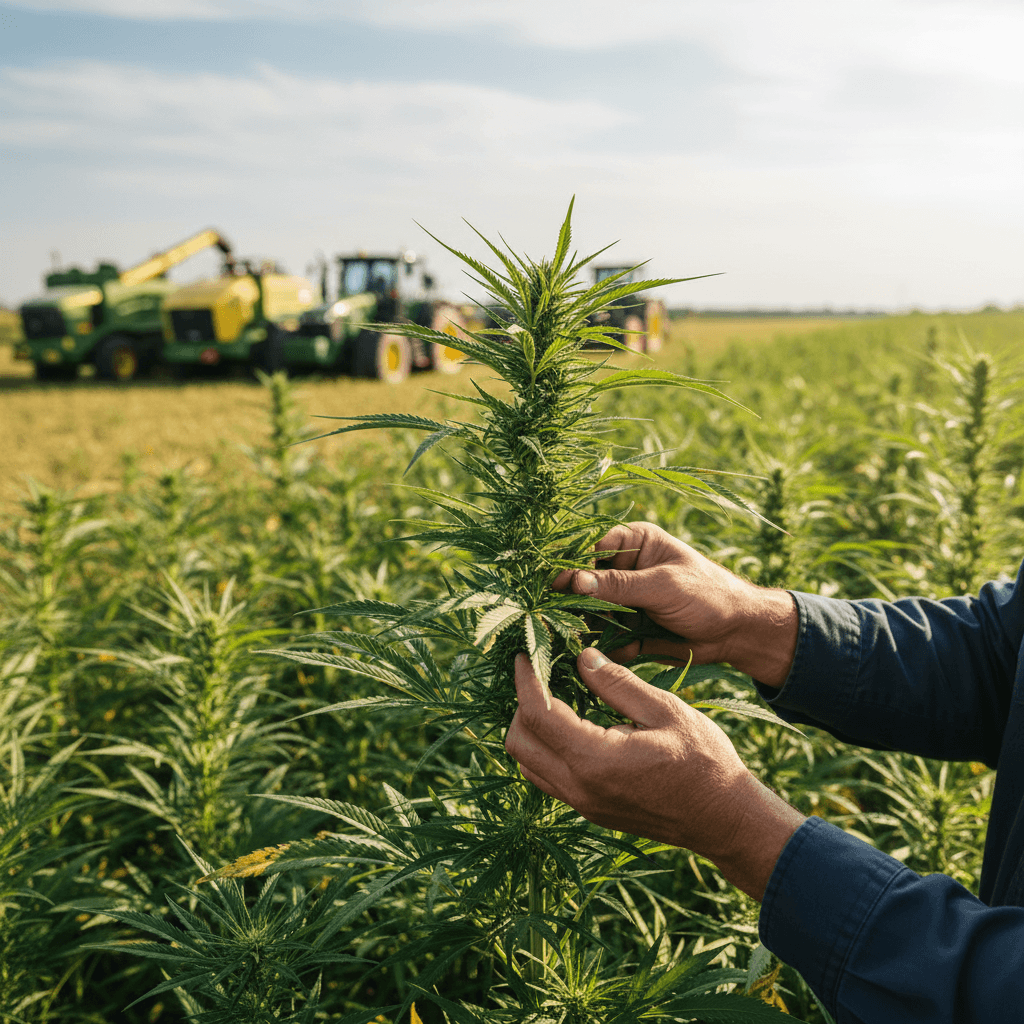

Industrial hemp in the United States is facing significant challenges. The industry advocates for clear policies that distinguish between cannabinoid-based products and legitimate agricultural applications. Geoff Whaling’s opinion piece published by The National Hemp Association, The National Hemp Association Board Chairman, states that despite the industry’s economic potential and farmers adoption, it faces disruption due to products in a gray legal area. AOL News.
Hemp as an Industrial Hemp: Economic Benefits
The 2018 Farm Bill included the Hemp Farming Act. Its intent was to restore industrial hemp’s status as an agricultural product. According to data, hemp farming has been growing at a rate of 30% annually. The agricultural industry is a growing sector, and this expansion indicates a demand for hemp. The broader economic potential, particularly in grain, feed, and oilseed markets, is estimated to be in the multi-tens-of-billions-of-dollars, supporting tens of thousands of jobs in the United States, as detailed in Whaling’s analysis.
Operators who are legitimate, such as farmers, researches, manufacturers and processors, focus on developing supply chains, building infrastructure and creating markets for grain and fiber. The stakeholders want clarity, fairness, and consistency in the regulation to encourage growth and competitiveness.
Regulatory Ambiguity Leading to Market Disruption
A segment of players operating outside the traditional agricultural sector are reportedly undermining progress in the industrial hemp industry. The entities manipulate trace cannabinoids, transforming them into high potency THC products which intoxicate. They are known as “gas-station weed” but they exist within a gray legal area that has limited supervision, raising health concerns.
Recent legislative proposals, it is reported, have reinforced these fears by prioritizing protection of an intoxicant unregulated market. Whaling says that many of these legislative proposals fail to meet core agricultural requirements, like providing pathways for grain and fiber, food frameworks, low dose beverages or feed, as well as strategies to build a domestic supply network. This strategy could hinder the growth of industrial hemp as a whole.
Industrial Hemp: Policy solutions proposed
Whaling recommends that policy reform be multi-faceted to meet the challenges of today. The solutions proposed aim to create a framework that is clear for the industrial hemp industry:
- Statutory Distinction It is important to establish a legal distinction between cannabinoid and true industrial hemp. This includes fiber and grain. There are two distinct markets that have different regulatory and risk requirements, as well as end-uses.
- Cannabinoid Framework – Rational: Create a regulatory framework for cannabinoids that includes:
- The FDA (Food and Drug Administration) has a legal pathway to obtain non-intoxicating cannabinoids.
- Intoxicants should be regulated and supervised in a way that is appropriate.
- The Alcohol and Tobacco Tax and Trade Bureau could be able to supervise and tax low-dose hemp drinks.
- Integrating the Agricultural Economy: Hemp has a huge potential for agriculture.
- Acquiring federal recognition for hemp and its ingredients as food and feed components.
- Establishing domestic animal feed approval pathways
- Supporting initiatives in fiber manufacturing and processing as well as market development.
- Ensuring alignment with relevant federal programs, including Centers for Medicare & Medicaid Services (CMS) pathways where appropriate.
According to reports, policymakers have been engaged in conversations that indicate a willingness for reassessment and refinement of existing frameworks. National Hemp Association promotes a careful and deliberate approach, which incorporates the input of stakeholders who are actively developing the industry. It is important to create policy to support industrial hemp’s economic realities, so that it can contribute to rural development and a new manufacturing base.
Disclaimer: The information contained in this article is not intended to be a substitute for medical advice. Hemp Gazette makes no medical diagnoses, recommendations or treatment plans. Consult a healthcare professional before you make any decision regarding your health. The Therapeutic Goods Administration in Australia (TGA) has not evaluated any statements regarding the therapeutic use of cannabis or hemp-derived products. TGA regulations allow Australians to access medical cannabis through prescription.
Sponsored Content
This informative article is brought to you by NUBO CBD →