







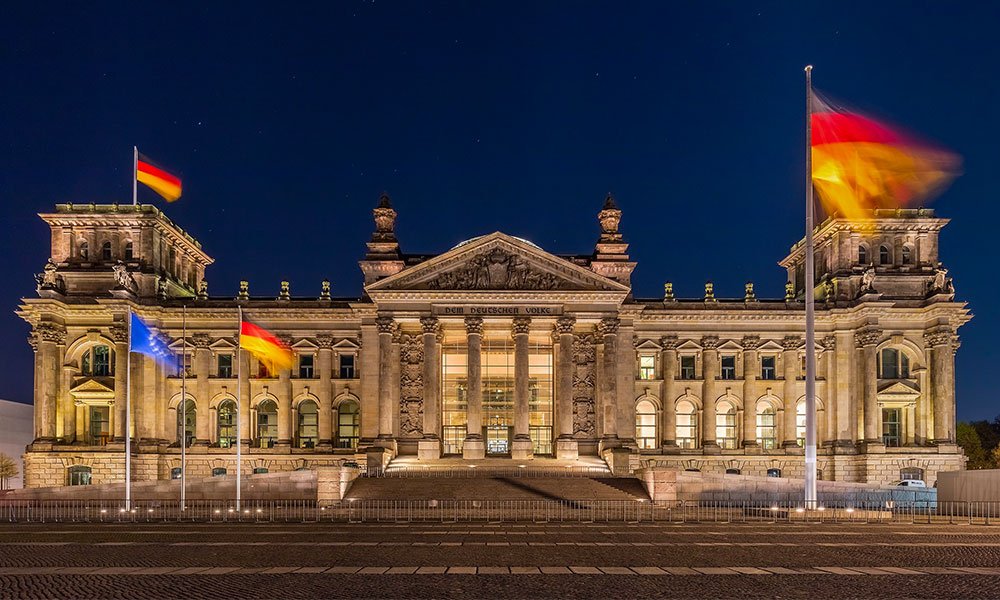

Germany is the global hub for legal cannabis expansion. Germany is the number one destination for the export of medical cannabis products to other countries. It received more than 201 tons in the calendar year 2025 alone. Germany’s medical cannabis patients continue to grow exponentially year on year. Medical product imports reflect this growth.
Sanity Group, a leading German medical cannabis company, is based in Germany. Sanity Group, a German cannabis company that has recently been acquired by Organigram, a global leader in the cannabis industry.
Finn A. Hänsel is currently the Managing Director and one of the founders of Sanity Group. Hansel is also on the board of Bundesverband Deutsche Startups and a mentor at the Techstars accelerator. Mr. Hänsel will be speaking at both the upcoming members-only Talman House investor event in Berlin and the International Cannabis Business Conference (ICBC), also in Berlin, next month. Below is an interview with Mr. Hänsel in the lead-up to the events:
- Why did you decide to become involved with the Medical Cannabis Industry?
A private experience, when I was leader of the Young Conservative Party in Northern Germany (“Junge Union”) changed my views about cannabis. It was in 2003. I became a cannabis advocate in general and a medical cannabis advocate specifically since then. In the early years of my career, I worked in FMCG (FMCG), management consulting firms like BCG and digital tech start ups. In 2017, when the German government regulated Medical Cannabis, it became clear that I needed to focus on what I was passionate about: building a business to make an impact in European Cannabis.
- You founded Sanity Group together with other partners in 2018. The German legal medical cannabis sector was at a very early stage. How has your business and that of the German cannabis industry grown over time compared to your expectations?
Our original business plans were far more aggressive in nature than the reality. It’s true that every company starts off with a healthy dose of optimism. Without it, most people would not start a business. And especially in cannabis, the regulatory environment can turn out to be a rollercoaster: CBD novel food, medical cannabis, recreational cannabis, pilot projects, clubs, home grow – the environment can change very quickly depending on political majorities. We are happy with the developments in Germany for 2024 and we see a very positive market development. There is much more regulatory work that needs to be done.
- You have been in the cannabis business for 8 years. What valuable lessons can you share with aspiring entrepreneurs?
Resilience is a must. Do not give up. Instead, adapt quickly to changes and use your navigational skills through the uncertainty. Speed, resilience, flexibility, antifragility, and courage are the reasons entrepreneurs often win against large corporates.
- You’ve founded several businesses, some of which are not cannabis-related. You have founded and developed several companies, including non-cannabis ones.
It’s a tough one. The cannabis industry, especially as it relates to healthcare, is unlike anything else I have seen. At its core the cannabis business isn’t very digital. In the early days, there wasn’t much of a overlap in terms of business. But I was able to raise funds from investors, establish a brand, develop a team, and create a vision. The skills I acquired during my career as a tech startup entrepreneur helped me incredibly.
- It was recently announced that Sanity Group is being acquired by Organigram, marking the most significant M&A news of the year. How was that deal made?
A Venture Capital funded company will at some point always be looking for an exit. That is just the nature of things as shareholders provide money to ideally generate a Return-on-investment.However, what is critical is finding the right moment and the right partner. BAT introduced us to its cannabis ecosystem a few year ago. Organigram was their largest investment. We have built an excellent and trusting relationship over the years with Organigram, and also believe that complementary skills and assets are important. After we had doubled our revenue for the second consecutive year, and we became profitable, the interest of third parties to purchase us increased. The moment we began to discuss acquisitions was when our revenues doubled for the second year in a row and turned profitable.
- What advice would you give to other industry leaders who have a desire to successfully complete an M&A deal?
Rome was not built in a day. You rarely get a “once in a lifetime” cannabis deal overnight. Building trust, showing traction and proving value takes time and can rarely be rushed – so take your time to build a great business and prove that you have a good asset. You should also be aware of your expectations from potential partners and their ability to meet these. In cannabis in particular, there are few buyers as the traditional corporations (e.g. FMCG companies are hesitant to invest large sums of money in the cannabis market. Choosing the right partner for your business is essential.
- What impact will the M&A deal between Sanity Group and Organigram have on your future endeavors?
The two companies I work with are great matches. Our businesses will be enhanced by our synergy. Organigram as the Canadian, domestic market leader in recreational cannabis, with a large high-quality production facility and great R&D capabilities, and great networks in Canada, Australia and also Europe. Sanity Group, one of Europe’s leading players, has a wealth of experience with Medical Cannabis. They have also started international businesses in the UK, Poland, and Czech Republic. Sanity Group will still remain independent and will continue to work with cultivators outside Organigram – from that perspective, not too much will change.
- Over the past 12 months, the medical marijuana opponents in Germany tried to reverse Germany’s momentum. What has your company done to navigate the current political debate?
We have been and always will be in close touch with the politics. Through my personal network or industry collaborations, or our BPC medical cannabis association. We agree that some politicians have argued the cannabis industry has overdone it (e.g. marketing). While we agree with some politicians that the industry overdid it in certain areas (e.g. Access for patients must remain easy, otherwise they will not come to the legal market. But we also still fight for adult-use pilot projects – because only if consumers have access to clean recreational cannabis, the need to mis-use the medical way can be 100% eliminated.
- Which areas do you think are most lucrative in the German cannabis industry?
How the regulatory environment evolves is crucial. New opportunities are created by every chance. You would not have believed me when I said “teleclinics”, if asked a year earlier. Now, I believe the market is nearly saturated. The regulatory framework has at least been debated. What will this year bring? Let’s talk about the next one!
- What can be done to improve the German medical cannabis industry and its laws and regulations?
Two main objectives are always on my mind:
- If the evidence is sufficient, cannabis should be made available for everyone in need.
- All adults who are interested in cannabis as a recreational substance should have access to high-quality, clean cannabis that is distributed legally and responsibly.
If I were in charge, I would combine the regulation of medical cannabis with that for recreational cannabis, while making sure to keep them separate. Medical Cannabis is already well-established, but it should have better regulations on prescriptions. Licensed teleclinics should be offered, and recreational cannabis could also be made available through pilot projects to help generate data.
- Due to several factors, the German market is very attractive for cannabis companies from outside Germany. What is your advice for non-German companies who want to collaborate with German cannabis firms and enter the German market?
You shouldn’t choose the very first partner who contacts you. You should do your research and learn about the current market structure, how it is competitively structured, and the main players. A lot of international cultivators we know were promised massive volumes and ended up being disappointed as those volumes never were realized – or in the worst case cultivators weren’t paid.
- What impact has the legalization of adult use in Germany had on medical cannabis?
Legalizing adult use cannabis has no impact on the medical marijuana industry. In Germany, there is no data on adult-use marijuana. Although we think that some consumers are misusing the medical system, the majority of patients today use cannabis for medical purposes.
- As a veteran speaker, you will be speaking at the International Cannabis Business Conference. This year, what are you looking forward to the most?
Each year I am honored to give a speech at the International Cannabis Business Conference, which is held in Berlin. The International Cannabis Business Conference is unique, as it attracts a wide international audience. ICBC gets better and bigger every year. Based on my online observations and my discussions in person with industry colleagues, ICBC this year is going to be especially outstanding. The new additions this year such as Cultivation Pavilion and the Pharmacy Meet-Up are very exciting. I understand that thousands of cannabis buyers from around the globe will attend, as well as most of the largest licensed producers in the world and almost all European and International wholesalers. The event will provide a great opportunity for you to network with top-level leaders from all major cannabis markets around the globe and discuss potential collaborative opportunities. I’m excited to find out more from my global peers, and I’m looking forward to the networking and presentation opportunities at the ICBC.
- Which emerging cannabis markets do you find exciting in Europe, and why?
Czech Republic, Switzerland and UK are all still interesting to me. France may be an option, depending on its regulatory framework. Slovenia just introduced a medical cannabis framework that’s very progressive, and Switzerland is likely to be the first European country in 2028 who will fully legalize. There will be a great deal of excitement in the coming years, with many potential opportunities for entrepreneurs and the cannabis industry.
- In 5 years, where do you envision the cannabis industry in Germany?
I consider myself an optimist. Furthermore, I’m an optimist: I believe we will continue to have good regulation of medical cannabis. We have the capacity to serve up to around 2.0m cannabis patients.
- In 5 years, where do you envision the European cannabis industry?
It is my hope that at some stage we will see a European framework on cannabis for medical as well as recreational use. The European bureaucracy is notoriously slow and I think that this timeline will be met. It would make me happy to see at least three or four large medical cannabis frameworks in other countries, including the fully-legal Swiss market.
***
Talman House provides a range of services that are only available to members. It connects investors with cannabis-related startups and companies. The European focus of the Talman House gives its members an edge in a newly-developing market.
Members get exclusive access and insights from experts, along with entry into curated events. One such event is coming up in Berlin at the end of next month. Members-only events include first-look pitches, investor panels and networking. Learn more at: https://thetalmangroup.com
ICBC Berlin, 2026 is expected to bring together more than 5,000 cannabis industry leaders, including representatives of every industry sector, international policymakers, industry service providers, and cannabis industry experts.
This year, ICBC Berlin will host thousands of cannabis buyers from around the world. 90% of licensed cannabis producers and almost all European and International wholesalers, distributors and retailers will attend the event. This is the first time that the legal international cannabis sector has seen a gathering this large and of such caliber. Learn more and register at: Internationalcbc.com/berlin.
Sponsored Content
This informative article is brought to you by NUBO CBD →