








Oregon officials ask a federal appellate court to reverse the judge’s decision that struck down voter-approved laws requiring licensed marijuana business to enter labor peace agreements and require that employers stay neutral during discussions about unionization.
Attorneys for Oregon Governor. Tina Kotek, Attorney General Dan Rayfield and Dennis Doherty and Craig Prins of Oregon Liquor and Cannabis Commission (OLCC), all Democrats, urged a review on the constitutional challenge to the Oregon law.
In June, the officials had notified the court that they would be appealing the District Court of Oregon’s decision.
After two marijuana businesses—Bubble’s Hash and Ascend Dispensary—initially filed a lawsuit in the district court challenging the implementation of Measure 119, a federal judge sided with the plaintiffs, finding that the law unconstitutionally restricts free speech and violates the federal National Labor Relations Act (NLRA).
A marijuana business that could not provide proof of an agreement on labor peace would have faced a refusal or loss of license.
Law360 reported that the law in question is constitutional. “It does not prohibit employers’ expression on unionization or other topics, so it does no conflict with First Amendment protection of free speech, nor does it violate any substantive provisions in the NLRA”, the filing says. Even if the law affects employers’ right to freedom of speech, this effect can be justified under the NLRA since that federal statute does not protect it.
It continues, “Further to that extent, the federal law protects employer expression regarding unionization. This leaves space to accommodate local interest in closely regulating the cannabis market which Congress intended be tightly regulated.” And any restriction on speech is permissible as well under the First Amendment, because it’s limited to commercial speech.
In an order in May, the district court judge walked through various components of the legal arguments from both sides and ultimately agreed that the Oregon law is preempted by the NLRA, which is meant to provide protections for workers who want to unionize—but specifically preserves the right for “uninhibited, robust, and wide-open debate in labor disputes.”
Judge ruled that requiring neutrality in negotiations between employers and employees is a violation to the NLRA.
State asserts, however, that the federal district court should reverse its judgment and the court of appeals “should remand this case to the district court with instruction for it to enter judgement in defendant’s favor on preemption claims and First Amendment claims.”
—
MEDCAN24 tracks hundreds of marijuana, psychedelics, and drug policy legislation in state legislatures this year. Patreon subscribers who donate at least $25/month gain access to interactive maps, charts, hearing calendars and more.
Find out more about our marijuana law tracker. To get access, become a Patreon supporter.
—
The cannabis companies argued, on the issue of whether or not the law violates First Amendment rights under the U.S. Constitution that “Measure 119” is a restriction based on content that must be subjected to strict scrutiny and that the defendants have failed to demonstrate a compelling interest by the government that requires this restriction.
Measure 119 passed with about 57 percent of the vote last November. A regional chapter of United Food and Commercial Workers (UFCW)—UFCW Local 555—had submitted more than 160,000 signatures to qualify the measure for ballot placement last year.
Oregon legislators declined to pass similar legislation during their 2023 session. After the failed effort to pass that bill, UFCW decided to launch a new campaign in order to allow voters to decide this issue.
UFCW pressed lawmakers to enact a labor code codification bill in 2023. And after it was effectively killed by a top House Democrat, it announced that it would be leading a recall effort to oust him.
Below you can read the court documents filed by the Federal Court in Oregon’s marijuana labor laws lawsuit.
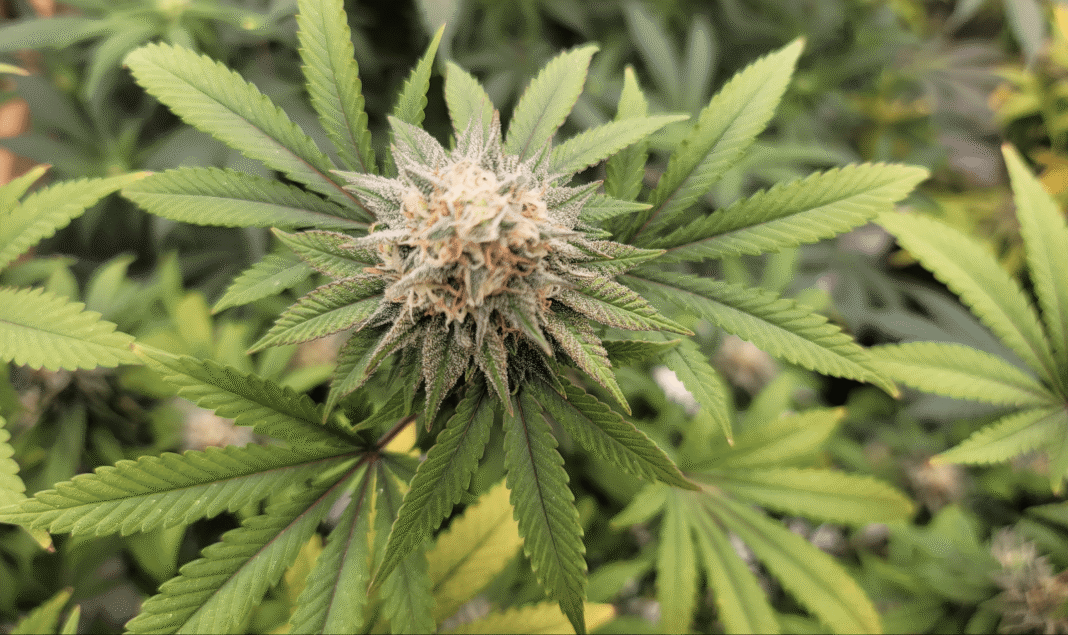
Mike Latimer is the photographer.
MEDCAN24 would not be possible without the support of readers. Please consider making a Patreon monthly pledge if you depend on our cannabis journalism for information.

Sponsored Content
This informative article is brought to you by NUBO CBD →