







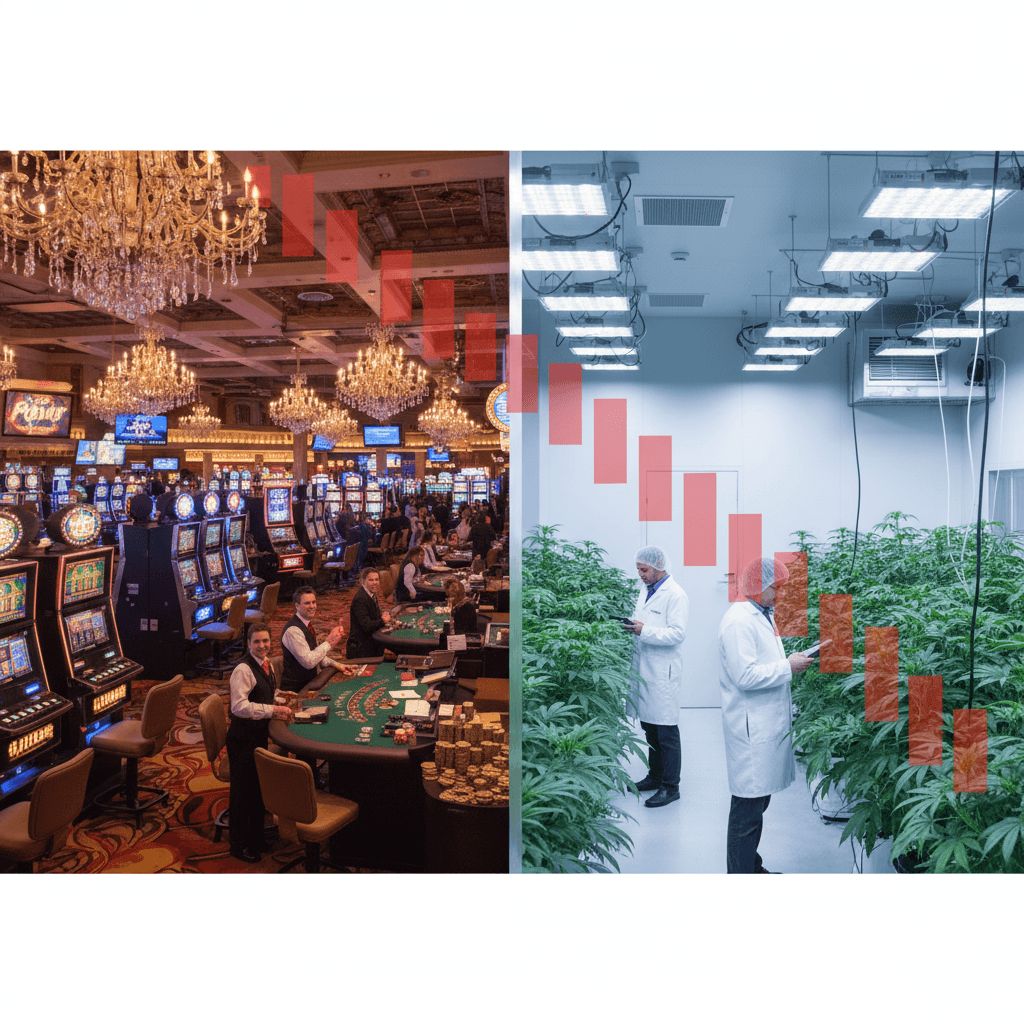

Nevada Cannabis Revenues Affected by Industry Separation
Nevada loses out on an estimated US$80m in cannabis taxes annually due to the regulations that separate its licensed cannabis from gaming, says a report. According to a recent report, this policy is also cited as one of the factors that drive consumers toward unlicensed cannabis products on the illegal market. Marijuana Moment.
The findings emerged from the 3rd Annual Gaming & Cannabis Policy Discussion, hosted by the University of Nevada Las Vegas (UNLV) Cannabis Policy Institute and International Gaming Institute. The event brought together lawmakers and government officials to discuss the consequences of laws that hinder the integration of licensed cannabis with Nevada’s gaming industry.
Economic Barriers and Regulatory Constraints
UNLV Cannabis Institute’s “The 1500 Foot Wall” report highlights the specific rules which create barriers.
- Marijuana deliveries are banned in most casinos and hotels.
- Cannabis retailers are prohibited from selling cannabis within 1,500 ft of gambling establishments.
- Gaming licensees are prohibited from profiting or participating in the cannabis licensed sector.
This report states that the regulations cause cannabis companies to lose US$750 Million in revenue annually. The report estimates that US$540 from retail transactions and US$210 from wholesale transactions. Unrealized tax revenues from missed sales contribute to approximately US$80 millions in Nevada cannabis revenue lost annually.
According to the authors, these separations impose severe restrictions on capital movement, tourism synergy and growth in public revenues, with no benefit for market participants, either economically, health-wise or from a safety perspective.
Justification of the Policy and current Challenges
The current regulatory framework is pushing licensed cannabis businesses out of the Las Vegas Strip and other commercial hubs. This report states that it allows illicit business to operate in the area without regulation, which leads to “unlicensed and unsafe cannabis being sold from the black market”.
The report also suggests that legal cannabis businesses struggle due to limited market access. Nevada Senator Rochelle nguyen, a Democrat, echoed the concerns of the Nevada Senate at a policy meeting, stating that it was “ridiculous” to think that one part of the tourism industry had been restricted. She added that, although the original separation in 2014 may have seemed like a rational precaution, today, the decision is an anachronism.
Cannabis policy landscape is evolving
Nevada recently made some policy modifications in the cannabis sector. After years of rulemaking, the state opened its first marijuana-consuming lounge in February 2024. In 2021, Assemblyman Steve Yeager’s (D), and the then-Governor Steve Sisolak’s (D) legislation allowed for cannabis businesses to be integrated with yoga, or other activities, such as infused foods. In 2024, marijuana laws in the state will be updated, doubling the legal amount that an individual may purchase or possess.
The impact of the integration of the gaming and cannabis industries on Nevada’s cannabis revenues is still a topic of discussion in Nevada policy circles and the business community.
Disclaimer: The article provided here is only for informative purposes and not intended to be a medical recommendation. Hemp Gazette is not a medical provider and does not offer diagnoses or treatment plans. Consult a healthcare professional before you make any decision regarding your health. Therapeutic Goods Administration of Australia has not evaluated statements about the therapeutic benefits of cannabinoids, hemp or cannabis. TGA regulates the access to medical cannabis in Australia.
Sponsored Content
This informative article is brought to you by NUBO CBD →