







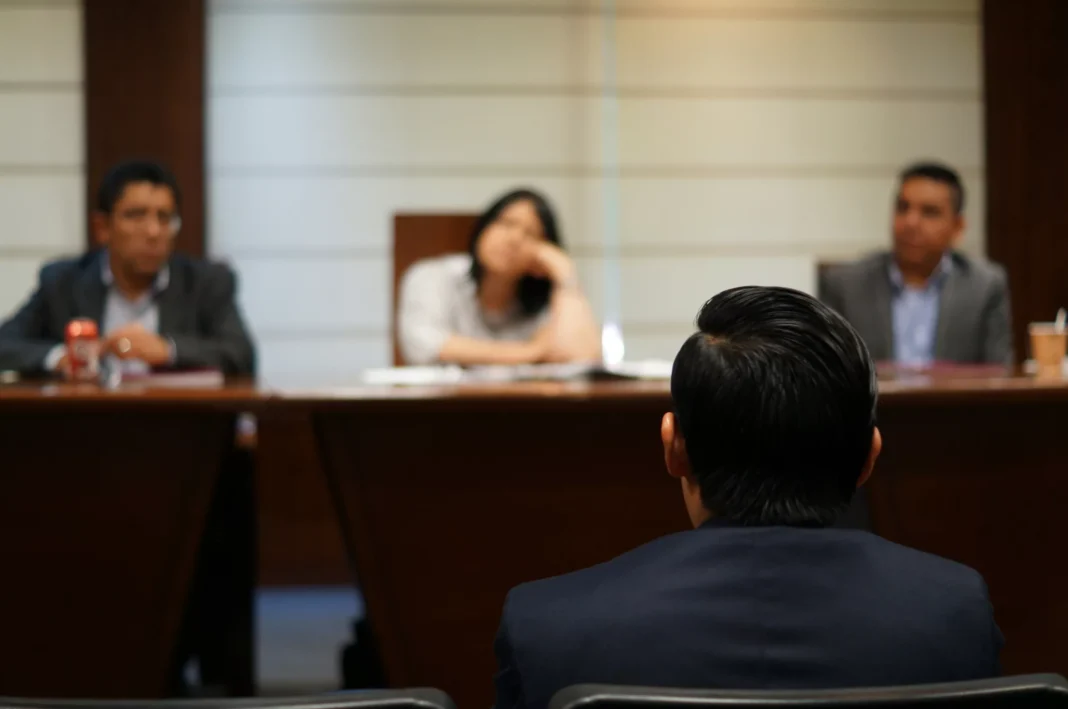

The landmark hearing about the rescheduling of cannabis in the US will conclude tomorrow (July 15th, 2026).
On July 14, the final designated witness will make their testimony public. It marks the culmination of an intense two-week period in which government analysis on medical uses, legal criteria used to determine it, as well as the anticipated downstream consequences of scheduling a rescheduling, have been scrutinized.
The oaths of witnesses have confirmed a division within the agency, while leading opposition experts admit that cannabis meets legal requirements for Schedule III classification.
The testimony from both sides over the past fortnight has provided us with some valuable information as the hearing nears its conclusion. Chief Administrative Law judge Derek Julius will be weighing the evidence to make his recommendations to the DEA.
The agency is divided
The longtime anti-cannabis group Smart Approaches to Marijuana called Dr Luli Adinfiresoye last week (7 July), a pharmacologist at the DEA’s Drug and Chemical Evaluation Section who has a PhD and authored the DEA’s 2024 Scientific Data Review on cannabis.
Akinfiresoye was called under subpoena and the DEA had resisted her participation. They issued a limited letter limiting Akinfiresoye’s testimony. However, Julius overruled some of these restrictions.
Akinfiresoye said to the tribunal that in 2024 she prepared an eight-factor independent analysis and in December 2024 she did a review, which she claimed the HHS’s analysis left out. She concluded cannabis does not have a medically accepted use by applying the DEA’s five-part CAMU traditional test. This, according to her, is a more rigorous CAMU and was upheld in court.
She said that marijuana isn’t reproducible consistently. State medical programmes were a main source of diversion. The DEA review also addressed important issues that HHS didn’t.
In the transcript of the hearing, her opinions were not contested by her government. Akinfiresoye believes her analysis relies on an outdated legal standard, and she is giving testimony to the D.C. court. Circuit Court of Appeals than to persuade Julius.
SAM also had Dr Bertha Madras as its other prominent scientific expert. She is a Professor of Psychology at Harvard Medical School and McLean Hospital. Bertha was also a senior official in the White House Office of National Drug Control Policy. She was also the first witness in the opposition to challenge the scientific evidence for medical use, instead of its downstream implications.
Madras said that marijuana lacked the consistency and purity of pharmaceuticals, as well as the validated dosage. She also testified that many clinical trials conducted by the FDA, were either unblinded tests or performed at potencies far lower than those available today in dispensaries. She claimed that the state programs allow for use of cannabis without the required controlled tests.
Madras admitted that he was wrong when questioned by the DEA. Cannabis meets Schedule III criteriaAccording to The Marijuana HeraldGretchen Gailey of The Dales Report, Washington correspondent, covered the hearings from the inside.
She also testified that cannabis does not produce the respiratory-depression deaths associated with opioids, because cannabinoid receptors do not regulate breathing in the same way. The government can use this point to support its argument about comparative safety.
Latest News
DEA opens hearing on rescheduling with scientific support for its own rule
As the DEA invited seven representatives to make their opening statement on Monday, June 29, the hearing began with the most significant hearing in US Cannabis policy history. Perhaps […]
The Story of Read it →
Alternative positions
National Drug and Alcohol Screening Association, which launched the case of the opposition on the 02 July, argued that rescheduling could undermine the legal framework governing employer cannabis tests.
Mary Jo McGuire (Director of the company) admitted under DEA interrogation that employers may continue to test regardless under their own policies.
Tests conducted by private employers would not affect the federally mandated Department of Transportation program, which includes safety-sensitive employees such as airline pilots and truck drivers.
DUID Victim Voices estimated, in their testimony on 7th July, that the rescheduling of traffic accidents could result in approximately 6,000 more drug-related deaths each year. Vicente LLP analyzed the legal proceedings and found that, according to their analysis, the government did not cross-examine.
Dr Kenneth Finn is a physician who specializes in pain management. He testified before the FDA on the 8th of July. In his testimony, Finn criticized the FDA’s clinical trials that were used to prove cannabis was medically beneficial. He said that these trials used lower potency cannabis products than the ones now available in dispensaries.
Reclassifying, he said, would legitimate a commercial marketplace selling products that bear very little similarity to the cannabis upon which his research was based.
DEA’s short cross-examination proved that cannabis has some benefits for clinical purposes, while not directly addressing Finn’s claim of product mismatch.
The Tennessee Bureau of Investigation (TBI) closed the hearing’s second week on 10 July with operational law-enforcement testimony from special agent Erica Stephens, who described seizing more than 10,000 pounds of cannabis from what she called ‘deregulated states’.
When asked to clarify what she meant by ‘deregulated’, Stephens replied ‘rescheduling’. They informed Stephens that Schedule III status wouldn’t decriminalise marijuana, stop federal controls or allow for diversion.
In a second round of cross-examination, the government pointed out that Schedule II chemicals such as Adderall or OxyContin are diverted and their schedule status is not used to justify reclassification. After finishing the hearing ahead of schedule on 9th July, it was paused one day before continuing with TBI’s argument.
What’s next?
Today (14th July), Dr Deepak Cyril D’Souza will present the case of Nebraska, Idaho Indiana and Louisiana with the founding director of the Yale Centre for the Science of Cannabis and Cannabinoids and the editor of Marijuana and MadnessWilliam Honsal is their main scientific expert. The proceedings are expected to end no later than the 15th of July.
After the close of testimony, both parties must submit proposed conclusions as well as post-hearing arguments. Julius issues a recommendation decision. Parties have 20 calendar days to submit exceptions.
The DEA administrator then decides whether to reschedule the case. This decision may be appealed in the US Court of Appeals. Most opposition members have spent their time building a record to support this challenge.
Sponsored Content
This informative article is brought to you by NUBO CBD →
Tomorrow, July 15, 2026, the historic administrative hearing regarding US cannabis rescheduling comes to an end.
The last designated participant called to give testimony today (July 14, 2014) will present their side of the story. This marks the conclusion of two dramatic weeks during which the medical use analysis of the government, the legal tests used to arrive at it and the downstream effects of rescheduling were all scrutinized.
The oaths of witnesses have confirmed a division between the agencies, while leading opposition experts agree that cannabis meets legal requirements for Schedule III classification.
The testimony from both sides over the past fortnight has provided us with some valuable information as the hearing nears its conclusion. Chief Administrative Law judge Derek Julius will be weighing the evidence to make his recommendations to the DEA.
The agency is divided
The longtime anti-cannabis group Smart Approaches to Marijuana called Dr Luli Adinfiresoye last week (7 July), a pharmacologist at the DEA’s Drug and Chemical Evaluation Section who has a PhD and authored DEA’s 2024 Scientific Data Review on cannabis.
Akinfiresoye had to testify under subpoena. The DEA issued a letter limiting her testimony. Julius, however, overturned some of the restrictions.
Akinfiresoye said to the tribunal that in 2024 she prepared an eight-factor independent analysis and in December 2024 she did a review, which she claimed the HHS’s analysis left out. She concluded cannabis does not have a medically accepted use by applying the DEA’s five-part CAMU traditional test. This, according to her, is a more rigorous CAMU and was upheld in court.
She said that marijuana isn’t reproducible consistently. State medical programmes were a main source of diversion. The DEA review also addressed important issues that HHS didn’t.
It declined to question her and left her findings unrefuted in the record. Akinfiresoye believes her analysis relies on an outdated legal standard, and she is giving testimony to the D.C. court. Circuit Court of Appeals than to persuade Julius.
SAM’s second marquee expert in science was Dr Bertha K. Madras. Bertha is Professor of Neurobiology at Harvard Medical School. She has also worked as a researcher and senior White House official for the Office of National Drug Control Policy. She was also the first witness in the opposition to challenge the scientific evidence for medical-use directly and not just its downstream implications.
Madras said that marijuana lacked the consistency and purity of pharmaceuticals, as well as the validated dosage. She also testified that many clinical trials conducted by the FDA, were either unblinded tests or performed at potencies far lower than those available today in dispensaries. She said that she believes state programmes allow use without controlled trials, which are required to approve conventional pharmaceuticals.
Madras admitted that he was wrong when questioned by the DEA. Cannabis meets Schedule III criteria. The Marijuana HeraldGretchen Gailey of The Dales Report, Washington correspondent, covered the hearings from the inside.
She also testified that cannabis does not produce the respiratory-depression deaths associated with opioids, because cannabinoid receptors do not regulate breathing in the same way. The government can use this point to support its argument about comparative safety.
Latest News
DEA opens hearing on rescheduling with scientific support for its own rule
As the DEA invited seven representatives to make their opening statement on Monday, June 29, the hearing began with the most significant hearing in US Cannabis policy history. Perhaps […]
The Story of Read it →
Alternative positions
National Drug and Alcohol Screening Association argued, in its opening of opposition case on 2 July 2002, that rescheduling cannabis testing would compromise the legal framework.
Mary Jo McGuire (Director of the company) admitted under DEA interrogation that employers may continue to test regardless under their own policies.
Tests conducted by private employers would not affect the federally mandated Department of Transportation program, which includes safety-sensitive employees such as airline pilots and truck drivers.
DUID Victim Voices estimated, in their testimony on 7th July, that the rescheduling of traffic accidents could result in approximately 6,000 more drug-related deaths each year. Vicente LLP analyzed the legal proceedings and found that, according to their analysis, the government did not cross-examine.
Dr Kenneth Finn is a physician who specializes in pain management. He testified before the FDA on the 8th of July. In his testimony, Finn criticized the FDA’s clinical trials that were used to prove cannabis was medically beneficial. He claimed that the trials were done with products of lower potency than what is now sold at state dispensaries.
He argued that rescheduling would legitimize a market for products which bear little or no resemblance with the cannabis on which the research is based.
The short cross-examination by DEA proved that cannabis has some benefits for clinical purposes, while not directly refuting Finn’s claim of product mismatch.
The Tennessee Bureau of Investigation (TBI) closed the hearing’s second week on 10 July with operational law-enforcement testimony from special agent Erica Stephens, who described seizing more than 10,000 pounds of cannabis from what she called ‘deregulated states’.
When asked to clarify what she meant by ‘deregulated’, Stephens replied ‘rescheduling’. They informed Stephens that Schedule III status wouldn’t decriminalise marijuana, stop federal controls or allow for diversion.
In a second round of cross-examination, the government pointed out that Schedule II chemicals such as Adderall or OxyContin are diverted and their schedule status is not used to justify reclassification. After finishing the hearing ahead of schedule on 9th July, it was paused one day before continuing with TBI’s argument.
What’s next?
Nebraska, Idaho Indiana and Louisiana will be presenting the case for their states today, July 14, with Dr Deepak Cyril D’Souza. D’Souza is the founder director of the Yale Centre for the Science of Cannabis and Cannabinoids and the Editor of Marijuana and MadnessWilliam Honsal is their main scientific expert. The proceedings are expected to end no later than the 15th of July.
Parties will then submit their proposed conclusions and briefs post-hearing after the testimony has ended. Julius issues a recommendation decision. Parties have 20 calendar days to submit exceptions.
The DEA Administrator then makes the final decision on rescheduling. This decision may be appealed in the US Court of Appeals. Most opposition members have spent their time building a record to support this challenge.
Sponsored Content
This informative article is brought to you by NUBO CBD →
Cannabis Law Resources for Poland
Discover essential legal information about the cultivation of cannabis, its sale, and regulations governing medical products in Poland. These guides will help you understand the legal requirements, such as certifications, permits, and compliance.
-
Polish News Registration and Interests of Cannabis Businesses
-
Permissions for Cannabis Sales in Poland
-
Authorization for Importing or Manufacturing Medical Products
-
Permission for Manufacturing or Importing Medical Products
-
Certificate of Good Manufacturing Practices (GMP)
-
Registration of Medical Products in Poland